OnePlus 13 vs Pixel 10 Pro: Best in India?
OnePlus 13 vs Pixel 10 Pro: cameras, performance, software, pricing, and which flagship wins in India.
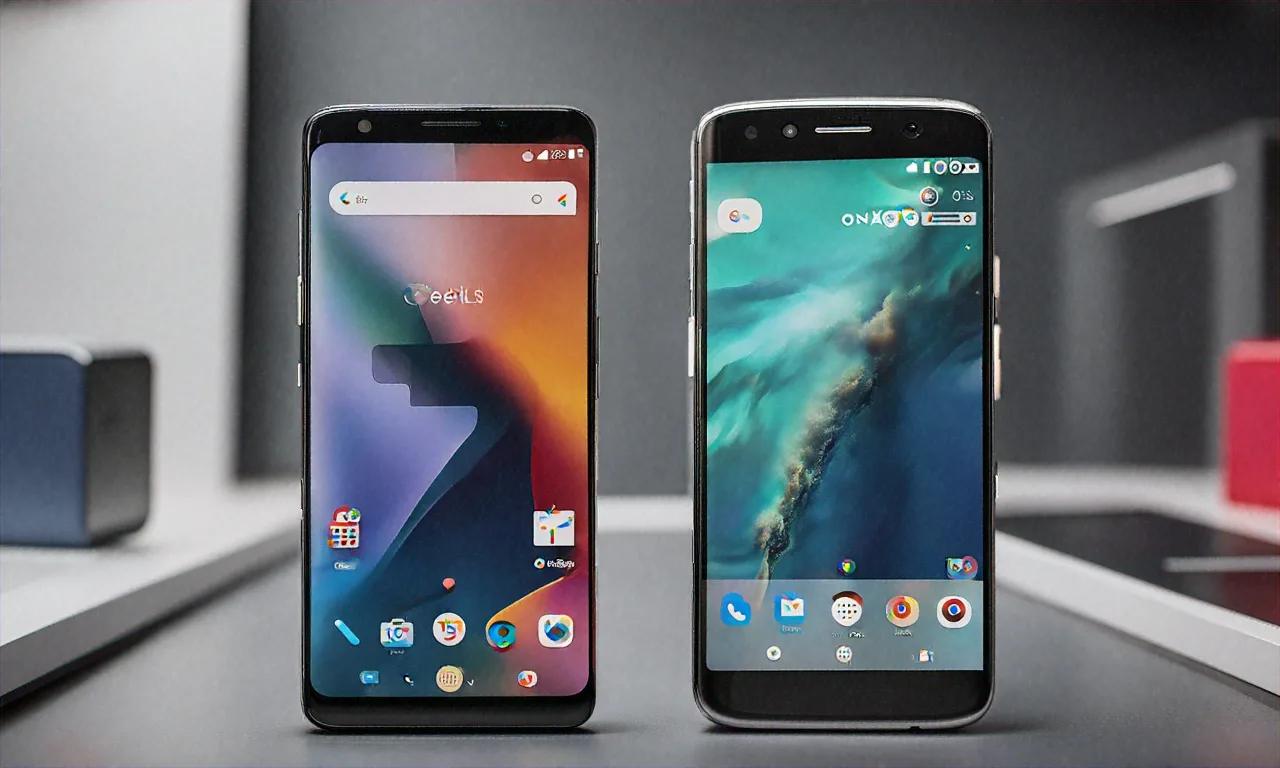
Ever noticed how most Android flagship comparisons quietly ignore the fact that these two phones aren't really competing for the same buyer? The OnePlus 13 costs Rs 69,999. The Pixel 10 Pro starts at Rs 79,999 — with half the storage. They're ten grand apart at baseline and the gap widens from there. You'd think that would settle things early, but it doesn't, because what each phone is good at barely overlaps.
OnePlus builds a phone the way someone builds a gaming PC. Fastest processor available? Check. Biggest battery they can cram in? Check. Charging speed that borders on absurd? Absolutely. Everything is a spec race and OnePlus wants to win every category on the data sheet.
Google does the opposite. The Tensor G5 chip benchmarks lower than last year's Snapdragon. The battery is smaller. Charging is slower. And somehow the Pixel 10 Pro still manages to be the phone that makes people pause and reconsider because of things that don't show up in any spec table — the camera processing, the AI features running on-device, the software that feels like it was made by people who actually use their own product.
I used both as daily drivers for three weeks each. Not a weekend unboxing — actual daily use through work calls, weekend photography trips, late-night doom-scrolling, navigating Bangalore traffic, and gaming sessions that went longer than I planned. Here's where I ended up.
In the Hand
OnePlus went with a flat-edge frame this year, subtle curves at the corners, Gorilla Glass Victus 2 front and back, aluminum frame. The circular camera island carries a Hasselblad logo. If you want to see how it stacks up against the wider market, our best smartphones of 2026 roundup puts it in context. At 210 grams it's substantial — you know you're holding an expensive phone. Weight distribution is good though, so it doesn't feel top-heavy despite the camera bump.
The alert slider is back. OnePlus removed it briefly a couple years ago, got hammered by their community, and brought it back. Three positions: silent, vibrate, ring. One of those features that sounds minor until you've used it for a week and then can't live without.
Colors in India: Midnight Ocean (a deep blue with micro-texture on the glass that catches light at every angle — genuinely pretty), Arctic Dawn (white), Black Eclipse.
Google's Pixel 10 Pro keeps the horizontal camera bar — either you like it or you don't, there's no in-between with that design choice. Polished aluminum frame, matte glass back, 195 grams. Noticeably lighter and easier during extended one-handed scrolling sessions. Design language is quieter. The camera bar houses three lenses in a symmetrical arrangement that reads as deliberate and clean.
Colors: Porcelain, Hazel, Obsidian, and a limited Rose Quartz that's genuinely striking if you can find one.
Both are well-built phones. OnePlus feels more substantial and premium in a traditional sense. Pixel feels lighter and more refined. Neither is objectively better. Depends if you equate premium with heft or with elegance.
Screens
OnePlus has the better display on raw numbers. 6.82 inches versus 6.7, QHD+ on both, but the OnePlus peaks at 4,500 nits while the Pixel tops out around 3,000. That brightness gap is dramatic under the Indian summer sun — the OnePlus remains perfectly readable outdoors while the Pixel needs some squinting and hand-cupping.
| OnePlus 13 | Pixel 10 Pro | |
|---|---|---|
| Size | 6.82" | 6.7" |
| Panel | LTPO AMOLED | LTPO OLED |
| Resolution | 3168 x 1440 (QHD+) | 2992 x 1344 (QHD+) |
| Refresh | 1-120Hz | 1-120Hz |
| Peak brightness | 4,500 nits | 3,000 nits |
| HDR | Dolby Vision, HDR10+ | HDR10+, HLG |
Color accuracy is excellent on both. OnePlus defaults to a slightly more vivid profile. Pixel gives you a more natural, sRGB-leaning rendering. For streaming — Netflix, YouTube, Prime — both deliver a gorgeous viewing experience. OnePlus's larger panel and higher brightness give it an edge, but Pixel's color accuracy makes movies feel more "cinematic" in a subtle way that's hard to articulate.
This one goes to OnePlus. The brightness advantage alone is worth it in a country where you spend a decent chunk of time staring at your phone outdoors.
Processing Power
Here's where the philosophical split gets interesting.
OnePlus runs the Snapdragon 8 Elite with 12 or 16GB of LPDDR5X RAM and UFS 4.0 storage. It puts up AnTuTu scores around 2,350,000, Geekbench 6 single-core near 2,800, multi-core near 8,200. These are big numbers. In practice: instant app launches, fifteen-plus apps staying in memory without reloading, gaming at maxed settings. It does what powerful chips are supposed to do.
Google's Tensor G5 benchmarks lower across the board. AnTuTu around 1,750,000. Geekbench single-core roughly 2,300. Multi-core about 6,800. On paper, it looks like OnePlus has a massive lead.
But papers lie. Or rather, they measure the wrong things.
For every normal task — launching apps, switching between them, scrolling feeds, browsing, typing in WhatsApp, navigating with Maps — the two phones are indistinguishable. I genuinely tried to notice a speed difference during my everyday use and couldn't. The Pixel handles regular phone duties just as smoothly as the OnePlus despite those benchmark gaps.
What Tensor does differently is AI work. On-device translation happens faster. Voice transcription is more responsive. Photo processing — the Magic Eraser, Best Take, the night mode computation — finishes quicker. Gemini integration across apps is smoother. None of this shows up in GeekBench, but it shows up in how the phone feels to use.
Where OnePlus wins decisively: gaming. I ran BGMI at HDR with the frame rate unlocked — OnePlus held 90fps consistently, Pixel would dip to 55-60 under the same settings. Genshin Impact at max quality: OnePlus stayed in the 55-60fps range, Pixel struggled around 40-45. If you spend more than an hour a day gaming, this isn't a close call.
Cameras
Both phones take good photos. Different kind of good.
The OnePlus 13 has a triple 50MP setup — main (Sony LYT-808, f/1.6), ultrawide (Samsung JN1, f/2.0, 114-degree FOV), and telephoto (Sony LYT-600, f/2.6, 3x optical). Hasselblad tunes the color science, which means warmer, slightly contrasty images that look excellent on social media without any editing. Skin tones lean warm and flattering. Dynamic range handles well.
Pixel 10 Pro: 50MP main (Samsung GNK, f/1.68), 48MP ultrawide with autofocus for macro (f/1.95, 125.5 degrees), and 48MP telephoto at 5x optical (f/2.8). Google's computational photography does the heavy lifting here, and it's been doing it longer than anyone else in the Android space.
Daylight shots from both phones are excellent. OnePlus images look punchier and more "ready to share." Pixel images look more true-to-life — cooler tones, more accurate colors, shadow detail that nobody else matches thanks to HDR+. If you showed both to a group, most people would probably pick the OnePlus at first glance (it pops more), but photographers would lean Pixel (it's more accurate). Neither is wrong.
Portraits are where the Pixel separates itself. Subject separation is nearly flawless. Google nails edge detection around hair, glasses, moving kids — all the difficult cases. The bokeh looks natural, with gradual falloff rather than a hard blur boundary. OnePlus has improved a lot with the Hasselblad processing, and the portraits are genuinely good. But side-by-side, Pixel's depth estimation and blur quality remain a step ahead.
Night photography: Pixel wins. Google's Night Sight has been the gold standard for years and it still is. Bright, detailed, noise-free images in conditions where your eyes can barely make things out. OnePlus's night mode has improved dramatically from older models, but in extremely dark scenarios, Pixel captures more shadow detail with less noise. In moderate low light — restaurants, street scenes — the gap narrows to almost nothing.
Zoom: Pixel wins again, thanks to that 5x optical telephoto. At 5x magnification, Pixel captures sharp, detailed images while OnePlus is digitally cropping from its 3x lens and losing quality. At 10x, Pixel still produces usable shots; OnePlus struggles. If you zoom frequently — wildlife, events, distant details — the Pixel's telephoto range is a meaningful advantage.
Video goes to OnePlus. 8K at 30fps (though 4K 60 is more practical), Dolby Vision HDR recording, 4K at 120fps for slow motion, and rock-solid stabilization. Hasselblad color profiles apply to video too. Pixel caps at 4K 60fps but has impressive spatial audio recording and a clever auto-FPS feature that adjusts frame rate based on lighting. For content creation, OnePlus offers more tools.
Software — Two Different Ideas About Android
OxygenOS 15 on the OnePlus has come a long way from the near-stock skin it used to be. Now it's feature-rich: deep customization, icon packs, gesture controls, a theme engine, the Shelf for quick widgets. RAM management is aggressive in a good way — keeps more apps in memory for faster switching. Gaming mode offers frame stabilization, notification blocking, and performance profiles.
The downsides exist. Duplicate apps (OnePlus's own alongside Google's). Aggressive battery management that occasionally kills background processes — a persistent complaint from Indian users who need WhatsApp notifications to arrive reliably. Promotional notifications from OnePlus services that you have to manually disable. OnePlus promises 4 years of OS updates and 5 years of security patches. Solid, but not the best.
Stock Android 16 on the Pixel is the cleanest phone software you can buy. No bloatware. No duplicates. Every app is a Google app and they all work together naturally. And the AI features that run on top are — I'll be honest — more useful than I expected:
Call Screen filters spam in real time and transcribes the caller's message so you can read it before deciding whether to pick up. In India, where spam calls are relentless, this alone might justify the Pixel. Live Translate works in WhatsApp, messages, and phone calls for Hindi, Tamil, Telugu, Bengali, and more. Circle to Search lets you draw around anything on your screen to search for it. Gemini integration provides context-aware assistance across apps.
Google guarantees 7 years of OS and security updates. That's the longest commitment in the industry — your Pixel 10 Pro would still be getting Android 23 when it hits end of support. For long-term value, nothing else comes close.
The trade-off: stock Android can feel basic. Theming is limited. Power-user features that OxygenOS includes — like that alert slider equivalent — just don't exist.
Battery and Charging
Not a close contest.
OnePlus packs 6,000 mAh and charges at 100W wired (plus 50W wireless). Full charge in about 30 minutes from a wall outlet. Thirty minutes. I'd plug in while getting dressed in the morning and leave the house at full.
Pixel has 5,050 mAh and tops out at 37W wired, 23W wireless. Full charge takes roughly 80 minutes. That's almost three times as long.
Screen-on time: I consistently got 7-8 hours from the OnePlus and 6-7 from the Pixel. Both last a full day of heavy use without worry, but the OnePlus gives you more margin. And when it runs low, the 100W charging means you can go from 20% to 70% during a lunch break.
India-Specific Stuff
Pricing makes a real difference here. OnePlus 13 starts at Rs 69,999 for 12GB/256GB. Pixel 10 Pro starts at Rs 79,999 for 12GB/128GB. So OnePlus costs ten grand less and gives you double the storage at the base tier. The 16GB/512GB OnePlus at Rs 79,999 matches the Pixel's base price while offering more RAM and four times the storage.
Service network: OnePlus has over 100 centers across major and tier-2 cities. Spare parts are easy to source, turnaround is generally quick. Google's network has improved but still lags — in tier-2 and tier-3 cities, getting a Pixel repaired might mean shipping it away. That's worth considering if you don't live in a metro.
Both support all 5G bands that Jio and Airtel use in India. Both work flawlessly with UPI apps — Google Pay, PhonePe, Paytm, no issues on either.
SIM flexibility: OnePlus takes dual physical nano-SIMs plus eSIM. Pixel does one nano-SIM plus eSIM, or dual eSIM. If you carry two physical SIMs — still common in India for personal and work lines — OnePlus is more accommodating.
Gaming vs Intelligence
This might be the cleanest way to frame the choice.
OnePlus 13 is the performance phone. Faster chip for raw tasks, bigger battery that lasts longer, charging that gives you a full tank in half an hour, better video recording, a display that's brighter in sunlight, and gaming performance that the Pixel can't match. BGMI at 90fps, Genshin at 60fps with maxed settings, OxygenOS's gaming mode optimizing the experience. If your phone is partly a gaming device, this is the one.
Pixel 10 Pro is the intelligence phone. A camera system that takes the best photos in the Android world — especially portraits and night shots. AI features that filter spam, translate conversations, and assist across apps. Seven years of guaranteed updates. Software that's clean and cohesive. And a 5x telephoto that captures things the OnePlus can't reach.
For photography, content consumption, and someone who values software refinement over hardware flexing — the Pixel. For performance, gaming, charging speed, and raw specs-per-rupee — OnePlus. For everything in between — office work, social media, communication — they're essentially identical in day-to-day use.
If you want the broader Samsung alternative, our Samsung Galaxy S26 Ultra review covers the pricier flagship option.
So Which One Deserves Your Money?
After six weeks of switching back and forth between these two phones, I'm not sure the answer is as clean as most reviews make it seem. The OnePlus 13 gives you more hardware for less money — that's a fact you can put in a spreadsheet. But the Pixel 10 Pro does something with less hardware that the OnePlus can't replicate — the camera processing, the call screening, the seven years of updates that mean you're buying a phone for the long haul rather than the next two years.
I keep circling back to one question that I can't settle: would I rather have a phone that does everything fast, or a phone that does the right things smart? And I genuinely don't know which matters more.
Maybe that's the answer. Maybe the fact that I can't pick one after six weeks means neither phone is clearly better — they're just clearly different. And the only person who can break the tie is you, based on which version of "good" lines up with how you actually use your phone.
Anurag Sharma
Founder & Editor
Founder and editor of Tech Tips India. Writes hands-on tech guides, reviews, and explainers focused on the Indian context — real rupee pricing, local availability, and practical setups tested before publishing.
Stay Ahead in Tech
Get the latest tech news, tutorials, and reviews delivered straight to your inbox every week.
No spam ever. Unsubscribe anytime.
Comments (0)
Leave a Comment
All comments are moderated before appearing. Please be respectful and follow our community guidelines.
Related Articles
Nothing Phone 3 Review: Worth the Hype in 2026?
Nothing Phone 3 review: Glyph 2.0, Nothing OS 3.0, camera quality, Snapdragon 8s Gen 4 performance, and India pricing verdict.
iPad Pro M4 vs Samsung Tab S10 Ultra Compared
iPad Pro M4 vs Samsung Tab S10 Ultra: display, performance, stylus, multitasking, apps, and value for money in India.
Electric vs Petrol Cars in India: Cost Compared
Electric vs petrol car cost comparison in India covering purchase price, charging, maintenance, insurance, and government subsidies.