Best Smartphones to Buy in India - February 2026
Our top picks for the best smartphones across all price ranges in India. From budget to flagship, find your perfect phone.
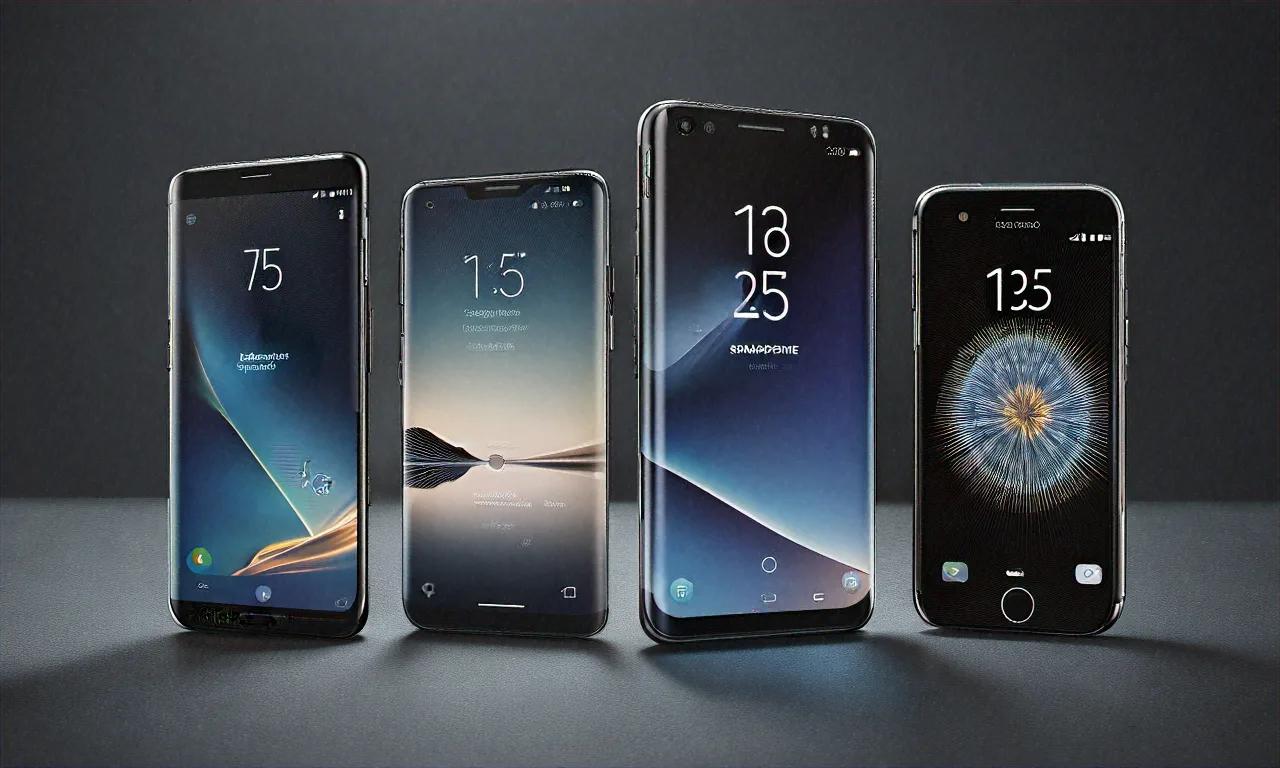
Five Phones. That's All You Need to Consider.
Okay, maybe nine. But hear me out — if someone handed me a budget and said "just pick one already," I could narrow India's entire smartphone market down to five real contenders. Budget buyers? Two options that actually matter. Mid-range shoppers? Three phones in a brutal cage match. Flagship hunters? A couple of devices worth emptying your wallet for.
February 2026 doesn't play around. Every price segment has at least one phone that would've been considered ridiculous value just eighteen months ago. I've spent weeks testing these things — dropping them in bags, gaming until they got warm, charging them at weird hours, snapping photos of street food at 11 PM. And I'm confident in every pick on this list.
Let me walk you through what made the cut, what didn't, and why.
How We Test Smartphones
Before jumping into recommendations, here's the deal with our testing process. Every phone on this list has been through at least two weeks of real-world use by our review team. We don't rely on spec sheets alone, because numbers on paper don't always translate to real-world experience.
Display testing: We check screens under controlled lighting conditions and in bright outdoor sunlight, measuring peak brightness, colour accuracy, and refresh rate consistency. A 120Hz display that stutters during scrolling? Worse than a smooth 90Hz panel. Probably not something you'd notice on a spec sheet, but you'll feel it within five minutes of use.
Camera testing: We shoot hundreds of photos and videos across different lighting conditions — bright daylight, indoor lighting, low light, and near-darkness. We compare results at the pixel level and also look at the overall image processing, including skin tones (which many phones get wrong for Indian complexions), dynamic range, and video stabilisation. Getting skin tones right matters more here than in most markets, and I think too few reviewers talk about that.
Battery testing: We run a standardised battery drain test that includes two hours of video streaming, one hour of gaming, one hour of social media browsing, and background usage. We also measure real-world endurance during normal daily use patterns. Numbers without context are meaningless — a 5,000 mAh battery in a phone with a power-hungry display might last shorter than a 4,500 mAh one in an efficient device.
Performance testing: Beyond synthetic benchmarks like AnTuTu and Geekbench, we test app launch times, multitasking performance, and sustained gaming performance over 30-minute sessions to check for thermal throttling. Sustained performance matters way more than a single benchmark spike.
Software experience: We rate the UI for bloatware, ads in the system interface, update commitment, and the overall smoothness and responsiveness of daily interactions. Nothing kills a good phone faster than annoying software.
Best Budget Smartphones (Under Rs 15,000)
1. Redmi Note 15 5G
- Price: Rs 13,999
- Display: 6.67-inch AMOLED, 120Hz
- Processor: Snapdragon 4 Gen 3
- Camera: 50MP main + 8MP ultrawide
- Battery: 5,200 mAh with 33W charging
Xiaomi's Note series won't quit. Honestly, at this point it's almost boring how consistently they dominate the budget segment — but boring in a good way. A vibrant AMOLED display at 120Hz for under 14K? That's remarkable. Snapdragon 4 Gen 3 handles everyday tasks and light gaming without stutters. Daylight camera quality impressed me. Low-light shots? Only average, if I'm being honest.
During our testing, the Redmi Note 15 5G consistently lasted a full day and a half with moderate usage. Thirty-three watt charging from the included brick takes it from zero to full in about 70 minutes — acceptable at this price. And that AMOLED display makes a real difference when you're watching YouTube or Netflix. Deep blacks, punchy colours. LCD panels at this price simply can't match it.
Here's the compromise, though. Software. HyperOS (what they're calling MIUI these days) still ships with some pre-installed apps and occasional notification ads. You can disable them in settings, but you shouldn't have to. Xiaomi commits to two years of Android updates and three years of security patches for this model, which seems like it might be enough for most people at this price.
Who should buy this: Students, first-time smartphone buyers, and anyone who wants the best possible display and battery experience under Rs 15,000.
2. Realme Narzo 80
- Price: Rs 11,499
- Display: 6.5-inch IPS LCD, 90Hz
- Processor: MediaTek Dimensity 6300
- Camera: 50MP main + 2MP depth
- Battery: 5,000 mAh with 18W charging
Tighter budget? Understandable. For those watching every rupee, the Narzo 80 offers a clean software experience with Realme UI 6.0 and reliable battery life that comfortably lasts a full day. LCD display is decent, though it can't match the contrast of an AMOLED panel. That's the trade-off.
A no-frills phone. Does the basics well. In our testing, the 50MP camera produced sharp daylight photos with good colour accuracy, though that 2MP depth sensor is essentially a placeholder adding little value — I suspect Realme includes it just to pad the spec sheet. Dimensity 6300 handles WhatsApp, Instagram, YouTube, and light games like Subway Surfers without any lag. Heavier games like BGMI will run but only at low settings.
Eighteen-watt charging is the main drawback. Nearly two hours to fill that 5,000 mAh battery. Feels slow when competitors do it in half the time. If fast charging matters to you, spending the extra Rs 2,500 on the Redmi Note 15 is probably worth it.
Who should buy this: Users who prioritise a clean software experience over raw specs, and those who want a reliable phone for communication, social media, and content consumption.
3. Samsung Galaxy A16 5G
- Price: Rs 14,499
- Display: 6.5-inch Super AMOLED, 90Hz
- Processor: Exynos 1330
- Camera: 50MP main + 5MP ultrawide + 2MP macro
- Battery: 5,000 mAh with 25W charging
Here's something no other budget phone does: six years of security updates directly from Samsung. Six years! At under 15K! That makes it the most future-proof phone in this bracket by a wide margin. Super AMOLED display is bright and colourful, and Samsung's One UI remains one of the most polished Android skins available.
Performance is adequate rather than impressive. Exynos 1330 handles daily tasks smoothly but struggles with demanding games. If gaming is a priority, the Redmi Note 15 is a better choice. But if you want a phone that'll receive security updates until 2032, the Galaxy A16 stands alone. Not sure if any other budget manufacturer will match this commitment anytime soon.
Who should buy this: Users who keep phones for 3+ years, parents and elderly family members who need a reliable phone with long-term support, and Samsung ecosystem users.
Best Mid-Range Smartphones (Rs 15,000 - Rs 30,000)
Mid-range is where India's smartphone market gets genuinely exciting. Competition is fierce here. Phones in this bracket offer features that would've been flagship-exclusive just two years ago, and manufacturers are fighting tooth and nail for your money.
4. Samsung Galaxy A56 5G
- Price: Rs 27,999
- Display: 6.6-inch Super AMOLED, 120Hz
- Processor: Exynos 1580
- Camera: 50MP OIS main + 12MP ultrawide + 5MP macro
- Battery: 5,000 mAh with 25W charging
Samsung's A-series remains a fan favourite in India for good reason. Four years of OS updates and five years of security patches — that's a future-proof investment right there. Camera with OIS captures sharp photos even in tricky lighting. One UI 7 is polished and feature-rich without being bloated.
We recommend the Galaxy A56 to most people. Sounds boring, I know. Doesn't have the fastest processor or the biggest battery. But it delivers a consistently excellent experience across every dimension, and that's harder to find than you'd think. Twelve-megapixel ultrawide is genuinely useful for group photos and landscapes. OIS on the main camera makes a real difference for low-light photography and video recording — something I think people underestimate until they've compared OIS vs non-OIS shots side by side.
Samsung's software experience is arguably the best in the mid-range segment. One UI 7 is smooth, loaded with features without feeling heavy, and includes useful additions like Samsung DeX for desktop mode, Secure Folder for private files, and Samsung Pay for contactless payments. You're getting a lot of phone here.
Who should buy this: Anyone who wants a well-rounded, reliable phone with excellent long-term software support and doesn't need to play demanding games at maximum settings.
5. iQOO Z10 Turbo
- Price: Rs 22,999
- Display: 6.78-inch AMOLED, 144Hz
- Processor: Snapdragon 7s Gen 3
- Camera: 64MP OIS main + 8MP ultrawide
- Battery: 6,000 mAh with 80W FlashCharge
Raw performance your thing? iQOO Z10 Turbo is hard to beat at this price. Snapdragon 7s Gen 3 handles heavy games like Genshin Impact at medium-to-high settings. 6,000 mAh battery with 80W charging means you spend less time tethered to a wall socket. Zero to 50% in just 18 minutes. Wild.
Gaming tests revealed stable frame rates in BGMI at high settings for over 30 minutes, with the phone getting warm but not uncomfortably hot. That 144Hz display is buttery smooth — the difference between 120Hz and 144Hz is noticeable when scrolling through social media feeds and gaming. Not night-and-day, mind you, but once you see it, you can't unsee it.
And that 6,000 mAh battery? Genuine two-day battery for most users. In our standardised battery test, it outlasted every other phone in this segment by at least 20%. Combined with 80W charging that takes the phone from zero to full in just 40 minutes, battery anxiety becomes a non-issue. I think this might be the single best battery-to-charging-speed combo in the mid-range right now.
Tradeoff is the software. FunTouch OS is functional but not as polished as One UI or stock Android. Some pre-installed bloatware, though it can be uninstalled.
Who should buy this: Gamers, power users, and anyone who prioritises battery life and charging speed above all else.
6. Poco F7
- Price: Rs 24,999
- Display: 6.67-inch AMOLED, 120Hz, Dolby Vision
- Processor: Snapdragon 8s Gen 3
- Camera: 50MP OIS main + 8MP ultrawide
- Battery: 5,500 mAh with 67W charging
Now this is where things get interesting. Poco F7 punches well above its weight with a flagship-tier Snapdragon 8s Gen 3 chipset. Benchmark numbers rival phones costing twice as much. Dolby Vision display is vibrant and makes streaming content look fantastic. Our pick for the best performance per rupee in this segment. If you're a gamer, also check out our roundup of the best gaming phones in India for 2026 for phones tuned specifically for mobile gaming.
Snapdragon 8s Gen 3 is essentially a slightly down-clocked version of the chip found in phones costing Rs 50,000 and above. In our benchmarks, the Poco F7 scored within 10% of the OnePlus 14 in both single-core and multi-core CPU tests. For gaming, it runs Genshin Impact at 60fps on high settings. At this price. Extraordinary.
Camera is good but not class-leading. Fifty-megapixel OIS sensor produces sharp, well-exposed photos in daylight and acceptable results in low light. Image processing isn't as refined as Samsung's or Apple's, though — occasional over-sharpening and aggressive noise reduction. If camera quality is your top priority, the Galaxy A56 takes better photos despite having a slower processor. Seems like Poco put almost all their budget into the chipset, which is probably the right call for their target audience.
Who should buy this: Performance enthusiasts who want flagship-level speed at a mid-range price, gamers, and users who prioritise raw horsepower over camera finesse.
Best Flagship Smartphones (Above Rs 30,000)
7. OnePlus 14
- Price: Rs 49,999
- Display: 6.82-inch LTPO AMOLED, 1-120Hz, 2K resolution
- Processor: Snapdragon 8 Elite
- Camera: 50MP main (Sony LYT-808) + 50MP ultrawide + 50MP telephoto (3x)
- Battery: 6,100 mAh with 100W SUPERVOOC + 50W wireless
OnePlus has refined their flagship formula here, and honestly, it shows. Triple 50MP camera system, co-developed with Hasselblad, delivers stunning photos in every scenario I threw at it. 2K LTPO AMOLED display is one of the brightest we've tested, peaking at 4,500 nits. OxygenOS 15 based on Android 16 is smooth and bloat-free. That last part matters more than you'd think.
Best value in the flagship segment. At Rs 49,999, it offers a camera system, display, and performance that rival phones costing Rs 1,00,000 and above. Hasselblad colour tuning produces natural, true-to-life colours that look excellent without heavy processing. Three-times telephoto lens is genuinely useful for portrait shots and distant subjects — not a gimmick.
Battery? 6,100 mAh. Largest in any mainstream flagship. Shows up in real life, too. In our testing, the OnePlus 14 consistently lasted through a full day of heavy usage with 30% remaining by bedtime. Hundred-watt wired charging fills that massive battery in just 35 minutes. Fifty-watt wireless charging is a welcome addition.
OxygenOS 15 has returned to its roots after a few years of ColorOS influence. Clean, fast, free of bloatware. OnePlus promises four years of Android updates and five years of security patches, which is competitive with Samsung. I'd probably like to see them match Samsung's seven-year commitment, but four years isn't bad.
Who should buy this: Anyone who wants a flagship experience without paying flagship prices. Our top recommendation for most users with a budget above Rs 40,000.
8. Samsung Galaxy S26 Ultra
- Price: Rs 1,34,999
- Display: 6.9-inch Dynamic AMOLED 2X, 1-120Hz, QHD+
- Processor: Snapdragon 8 Elite for Galaxy
- Camera: 200MP main + 50MP ultrawide + 50MP 5x telephoto + 10MP 3x telephoto
- Battery: 5,500 mAh with 45W wired + 15W wireless
Samsung's most capable device. Arguably the best Android phone money can buy in India — though at this price, that word "arguably" is doing some heavy lifting. 200MP sensor captures extraordinary detail. Five-times optical telephoto is unmatched. Galaxy AI features, including real-time call translation and Circle to Search, add genuine utility. Seven years of updates seal the deal for those who keep phones long-term. If you're torn between Samsung's flagship and Apple's latest, our detailed iPhone 17 Pro Max vs Galaxy S26 Ultra comparison breaks down every aspect side by side.
Camera system is where the S26 Ultra truly shines. 200MP main sensor captures images with extraordinary detail, and Samsung's computational photography processes them into photos that look natural and vibrant. Five-times telephoto is the best zoom lens on any smartphone right now — sharp, usable images even at 10x digital zoom. For content creators and photography enthusiasts, no other phone in India offers this level of versatility. Not even close.
Galaxy AI has matured significantly. Real-time call translation works across 16 languages including Hindi, Tamil, and Bengali, making it genuinely useful in India's multilingual context. Circle to Search lets you search for anything on screen by drawing a circle around it. Note Assist can summarise, format, and translate your notes automatically. Some of these features feel like gimmicks when you read about them, but in practice they're surprisingly handy.
Main criticisms? Charging speed. 45W feels slow for a phone at this price, when competitors offer 100W+. And the price itself — at Rs 1,34,999, we'd only recommend it to users who'll fully use the camera system and AI features. Otherwise you're paying for capabilities that'll sit idle.
Who should buy this: Photography enthusiasts, content creators, and power users who want the absolute best Android experience regardless of price.
9. Apple iPhone 17 Pro
- Price: Rs 1,39,900
- Display: 6.3-inch Super Retina XDR, ProMotion, Always-On
- Processor: A19 Pro
- Camera: 48MP Fusion + 48MP ultrawide + 12MP 5x telephoto
- Battery: All-day battery with 35W MagSafe charging
For those in the Apple ecosystem — and let's be real, if you're already in, you're probably not leaving — the iPhone 17 Pro continues to set the standard for video recording and app optimization. A19 Pro chip delivers exceptional performance while maintaining industry-leading energy efficiency. Apple Intelligence features are now deeply integrated across iOS 20, making Siri genuinely useful for complex tasks. Might be the first time I've said that without sarcasm.
Calling it "just a phone" misses the point. It's an ecosystem play. If you're running a MacBook, iPad, Apple Watch, or AirPods, the integration between devices through AirDrop, Handoff, Universal Clipboard, and iCloud is unmatched by any Android manufacturer. For users already invested in Apple's world, switching would mean giving up these conveniences, and that's a steep cost beyond the sticker price.
Video recording remains the iPhone's strongest suit. ProRes video, Cinematic Mode with rack focus, and the best video stabilisation in any smartphone make the iPhone 17 Pro the default choice for serious video creators. App ecosystem is also an advantage — many high-quality apps and games launch on iOS first or are available exclusively on Apple's platform.
Downsides for Indian users include the high price (Apple products carry a significant premium in India compared to the US), no charger in the box, slower charging speed compared to Android flagships, and the more restrictive iOS environment that limits customisation. Whether that trade-off makes sense depends entirely on how deep you are in Apple's world.
Who should buy this: Apple ecosystem users, video creators, professionals who need the best app ecosystem, and users who value long-term software support (Apple provides 5-7 years of iOS updates).
Quick Comparison Table
| Phone | Price (Rs) | Best For |
|---|---|---|
| Redmi Note 15 5G | 13,999 | Best budget value |
| Realme Narzo 80 | 11,499 | Clean software on a budget |
| Samsung Galaxy A16 5G | 14,499 | Long-term software support |
| Samsung Galaxy A56 5G | 27,999 | Best all-rounder mid-range |
| iQOO Z10 Turbo | 22,999 | Battery and fast charging |
| Poco F7 | 24,999 | Performance per rupee |
| OnePlus 14 | 49,999 | Best value flagship |
| Galaxy S26 Ultra | 1,34,999 | Best camera system |
| iPhone 17 Pro | 1,39,900 | Apple ecosystem |
What to Look For When Buying a Phone in India
If your preferred phone isn't on this list, here are the key factors to evaluate on your own:
- Processor: For budget phones, Snapdragon 4-series or Dimensity 6000-series is the minimum for a smooth experience. Mid-range? Aim for Snapdragon 7-series or above. Avoid unbranded or very old chipsets — they'll frustrate you within months.
- Display: AMOLED is significantly better than LCD for media consumption and outdoor visibility. 90Hz is the minimum acceptable refresh rate in 2026; 120Hz is ideal. Anything below 90Hz feels sluggish now.
- Battery: 5,000 mAh is the baseline. Look for at least 33W charging. Anything above 67W is excellent. Below 20W? That's a dealbreaker in my book.
- Software updates: Check the manufacturer's update commitment. Samsung leads with up to 7 years, followed by Google (7 years) and OnePlus (4 years). Avoid brands that provide less than 2 years of Android updates — you'll regret it.
- 5G bands: Make sure the phone supports the 5G bands used by your carrier (Jio uses n28/n78, Airtel uses n1/n3/n78). Most phones sold in India now support the necessary bands, but it's worth verifying before you buy.
- After-sales service: Consider the manufacturer's service network in your city. Samsung and Xiaomi have the widest service centre networks in India, followed by Vivo/iQOO and OnePlus/Oppo/Realme. Having a service centre nearby matters more than people realize — until something breaks.
Where to Buy
Best deals in India are typically found on Flipkart and Amazon.in during sale events. Keep an eye out for bank card discounts and exchange offers, which can bring prices down significantly. For Samsung devices, the Samsung India website often has exclusive cashback offers. Once you've got your new phone, complete the setup with our guide to the best wireless earbuds in India for 2026 to pair it with a great audio experience.
Tips for getting the best deal:
- Wait for sales: Flipkart Big Billion Days (October), Amazon Great Indian Festival (October), and Republic Day sales (January) typically offer the deepest discounts of the year. Patience pays off — literally.
- Use bank offers: HDFC, ICICI, and SBI credit card offers during sales can provide an additional 10% discount (usually capped at Rs 2,000-5,000). Stack these with sale prices for maximum savings.
- Exchange your old phone: Both Flipkart and Amazon offer exchange bonuses during sales that can add Rs 2,000-5,000 to your old phone's trade-in value. Don't just toss your old phone in a drawer.
- Consider refurbished: Platforms like Cashify and Amazon Renewed sell certified refurbished phones at 20-40% discounts with warranty. Might not be for everyone, but the savings are real.
Here's What I'd Buy With My Own Money
No single "best" phone exists for everyone. Depends on what you care about and what you can afford. But here's what I'd actually spend my own money on, in each bracket.
Under 15K? Redmi Note 15 5G. Not even a contest at that price. Between 20K and 30K? Poco F7 if I care about performance, Galaxy A56 if I want the all-rounder that'll age gracefully. Above 40K? OnePlus 14. Hands down. It delivers a near-complete flagship experience at a price that undercuts everything else in the segment.
If budget truly isn't a constraint and you want the best Android camera, the Galaxy S26 Ultra is the one. Apple people will buy the iPhone regardless of what any reviewer says, and honestly, they're probably not wrong to — the ecosystem lock-in is real and genuinely useful if you're committed to it.
Whatever you choose, remember something I think too many people forget: a Rs 15,000 phone used confidently is always a better purchase than a Rs 50,000 phone bought on EMI with financial stress. Phones are tools. Great tools, fascinating tools, but tools. Don't let a purchase mess up your finances.
That's my honest take. Every phone on this list has earned its spot through weeks of real testing — not spec-sheet comparisons, not press release rewrites, not "first impressions" videos. Spend wisely. Your future self will probably thank you.
Anurag Sharma
Founder & Editor
Founder and editor of Tech Tips India. Writes hands-on tech guides, reviews, and explainers focused on the Indian context — real rupee pricing, local availability, and practical setups tested before publishing.
Stay Ahead in Tech
Get the latest tech news, tutorials, and reviews delivered straight to your inbox every week.
No spam ever. Unsubscribe anytime.
Comments (0)
Leave a Comment
All comments are moderated before appearing. Please be respectful and follow our community guidelines.
Related Articles
WhatsApp Tips and Hidden Features for Indians
WhatsApp hidden features: chat lock, formatting tricks, storage tips, privacy settings, and power user shortcuts.
Best Home Projectors in India: Complete Guide
A complete guide to the best home projectors in India across budget, mid-range, and premium segments, with tips on throw distance, lumens, and room setup.

Tech Salaries in India 2026: Real Numbers by Role
Real salary data for developers, DevOps, data scientists, and PMs across Bangalore, Hyderabad, Pune, and Delhi NCR in 2026.