Electric vs Petrol Cars in India: Cost Compared
Electric vs petrol car cost comparison in India covering purchase price, charging, maintenance, insurance, and government subsidies.
I Ran the Numbers on My Commute — Here's What I Found
My daily drive is 42 kilometres round trip — Thane to BKC, five days a week. For three years, I did it in a petrol Hyundai Creta. Fuel cost me roughly Rs 8,500 per month. One morning, stuck in the usual Sion-Dharavi traffic, engine idling, petrol gauge dropping, I pulled out my phone's calculator and just started punching numbers. If electricity costs Rs 7.50 per kilowatt-hour at home rates, and an EV gets about 7 km per kWh, then my 42 km commute would cost me... Rs 45. Per day. Compared to Rs 340 in petrol.
Forty-five rupees versus three hundred and forty. I stared at that number for a full minute.
That calculation started an obsession. Over the next few weeks, I built a spreadsheet covering purchase price, road tax, registration, insurance, fuel costs, electricity rates, maintenance schedules, charger installation, government subsidies — everything. Eight months ago, I bought a Tata Nexon EV Long Range. Now I've got real ownership data, not projections. Real electricity bills. Real maintenance receipts. Real encounters with charging infrastructure that sometimes works brilliantly and sometimes makes you question every decision you've ever made.
What follows is the complete financial picture. No sponsored content. No brand deals. Just a guy with a spreadsheet and eight months of actual ownership experience, breaking down whether an EV makes financial sense in India right now.
Cars We're Comparing
I'm using two specific matchups that represent the most common buying decisions in the Indian EV market:
Matchup 1: Tata Nexon EV Long Range vs Tata Nexon Petrol (Smart+ variant)
- Same car, different powertrains — eliminates most variables
- Nexon EV LR: Rs 17.49 lakh (ex-showroom)
- Nexon Petrol: Rs 12.49 lakh (ex-showroom)
Matchup 2: MG ZS EV vs Hyundai Creta SX(O) Petrol
- Competing in the same segment, similar size and positioning
- MG ZS EV: Rs 22.88 lakh (ex-showroom)
- Hyundai Creta SX(O) Petrol: Rs 17.69 lakh (ex-showroom)
All prices are February 2026 ex-showroom Delhi figures. On-road prices vary by state due to different road tax and registration policies, and this is where EVs get their first advantage.
Purchase Price and Registration: Where EVs Start Behind
On-Road Price Comparison
| Cost Component | Nexon EV LR | Nexon Petrol | MG ZS EV | Creta SX(O) |
|---|---|---|---|---|
| Ex-showroom | Rs 17.49L | Rs 12.49L | Rs 22.88L | Rs 17.69L |
| Road tax (Delhi) | Rs 0 | Rs 1.00L | Rs 0 | Rs 1.41L |
| Registration | Rs 600 | Rs 12,500 | Rs 600 | Rs 15,000 |
| Insurance (1st yr) | Rs 52,000 | Rs 38,000 | Rs 68,000 | Rs 48,000 |
| On-road price | Rs 18.04L | Rs 13.99L | Rs 23.57L | Rs 19.73L |
| Price difference | +Rs 4.05L | — | +Rs 3.84L | — |
EVs are exempt from road tax in most Indian states, and registration fees are minimal. Knocks off Rs 1-1.5 lakh from the on-road price gap immediately. Even so, the EV costs Rs 3.8-4 lakh more upfront. Four lakhs. That's real money.
Big question: do running costs claw that back — and if so, how fast?
Insurance for EVs runs higher because repair costs are higher. Battery and motor components are expensive to replace, and not every workshop can handle them. My Nexon EV insurance came in about Rs 14,000 more than what I'd been paying for the Creta in its first year. Not a dealbreaker, but it adds up.
Fuel vs Electricity: Where the Math Gets Interesting
Here's where EVs start fighting back. Let me break it down with real numbers — no manufacturer claims, no best-case scenarios.
Assumptions
- Annual driving: 15,000 km (average Indian urban + weekend highway use)
- Petrol price: Rs 108/litre (Delhi, February 2026)
- Home electricity: Rs 7.50/kWh (Delhi residential tariff, higher slab)
- Public fast charging: Rs 18/kWh (average across Tata Power and ATGE stations)
- Charging split: 80% home charging, 20% public charging
Annual Fuel/Energy Cost
Nexon Petrol:
- Fuel efficiency: 16 km/litre (real-world mixed driving)
- Annual fuel: 15,000 / 16 = 937.5 litres
- Annual cost: 937.5 x Rs 108 = Rs 1,01,250
Nexon EV Long Range:
- Energy efficiency: 7.2 km/kWh (my real-world average including AC usage)
- Annual energy: 15,000 / 7.2 = 2,083 kWh
- Home charging (80%): 1,667 kWh x Rs 7.50 = Rs 12,500
- Public charging (20%): 417 kWh x Rs 18 = Rs 7,500
- Annual cost: Rs 20,000
Annual saving: Rs 81,250
Eighty-one thousand rupees. Per year.
MG ZS EV:
- Energy efficiency: 6.8 km/kWh (heavier vehicle, slightly lower efficiency)
- Annual energy: 15,000 / 6.8 = 2,206 kWh
- Home charging (80%): 1,765 kWh x Rs 7.50 = Rs 13,237
- Public charging (20%): 441 kWh x Rs 18 = Rs 7,941
- Annual cost: Rs 21,178
Hyundai Creta Petrol:
- Fuel efficiency: 14.5 km/litre (real-world mixed)
- Annual fuel: 15,000 / 14.5 = 1,034 litres
- Annual cost: 1,034 x Rs 108 = Rs 1,11,724
Annual saving: Rs 90,546
Running costs are roughly 80% lower on electricity. That's not a typo. But here's something many EV articles gloss over: these numbers assume you can charge at home. If you live in an apartment where home charging isn't possible and you rely entirely on public fast chargers, your annual cost jumps to about Rs 37,500 for the Nexon EV. Still cheaper than petrol, but the gap shrinks significantly. Keep that in mind.
Home Charging Setup: The Hidden Cost Nobody Talks About
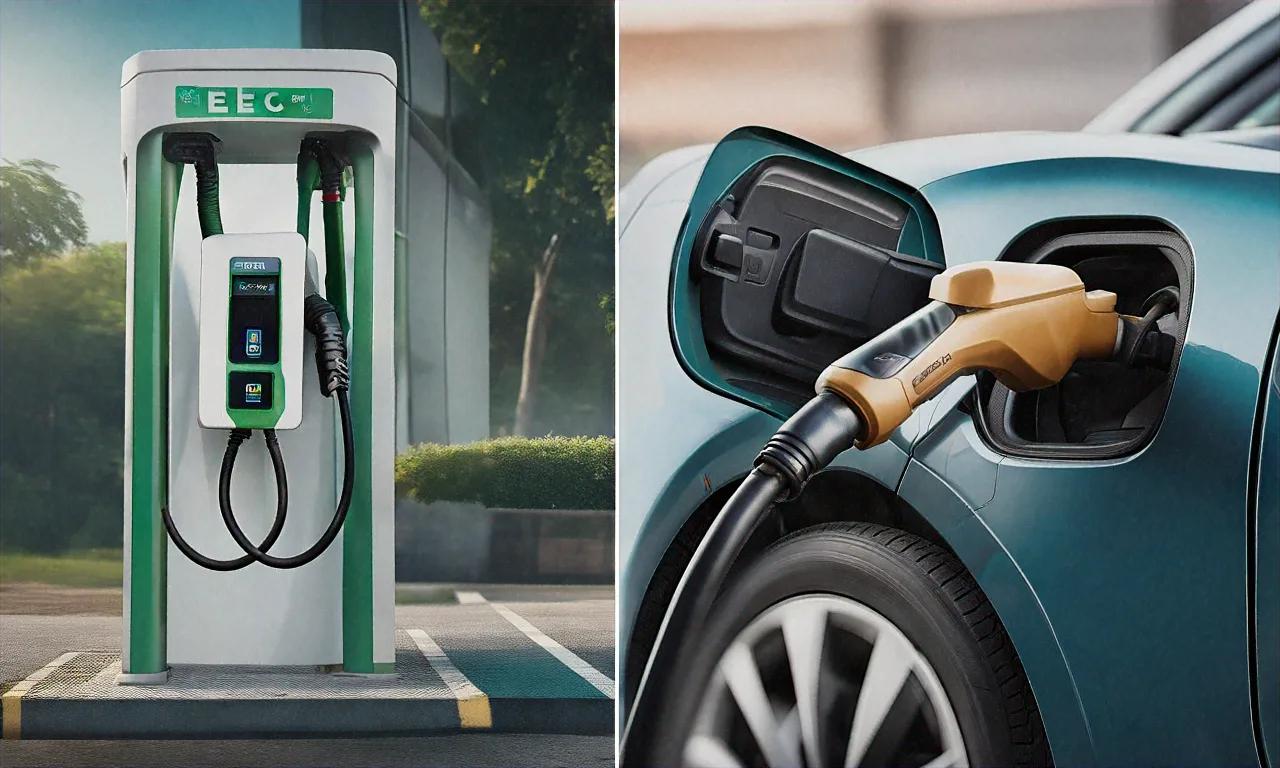
Setting up a home charger isn't just about plugging into a wall socket, though technically you can do that. I suspect most new EV owners start exactly this way. If you're building out your home with connected devices, our smart home setup guide for India covers how EV chargers fit into a broader smart home ecosystem.
Option 1: Standard Wall Socket (15A)
- Cost: Rs 0 (you already have one)
- Charging speed: About 8-10 hours for a full charge on the Nexon EV
- Reality: Works fine for overnight charging. Used this for my first three months. Plug in at night, wake up to 100%. Simple.
Option 2: Dedicated 3.3kW AC Charger
- Cost: Rs 25,000-35,000 (including installation)
- Charging speed: About 6-7 hours for a full charge
- Reality: Slightly faster, with safety features like overload protection and charge scheduling. Worth it if you want peace of mind. Probably what I'd recommend for most people.
Option 3: 7.2kW AC Charger
- Cost: Rs 50,000-70,000 (including installation and potential electrical upgrade)
- Charging speed: About 3-4 hours for a full charge
- Reality: Requires a dedicated 32A line. Your electrician might need to upgrade your home's main supply. Overkill for most people unless you drive a lot daily.
The Apartment Problem
If you live in a housing society, installing a home charger requires society approval. My experience? Six weeks of arguing in WhatsApp groups. A formal application to the RWA. A promise to install a separate meter so my charging cost isn't shared with common area electricity. Some societies are supportive. Others are hostile. Government has mandated that societies can't unreasonably deny EV charging installation, but "unreasonably" is doing a lot of heavy lifting in that sentence.
For people who genuinely can't install home charging — maybe you rent, maybe your society won't budge, maybe you park on the street — the math changes. Factor in Rs 35,000-40,000 annually for public charging instead of Rs 20,000. Still saves money versus petrol, but the payback period stretches out.
Maintenance Comparison Over 5 Years
Here's where EVs win convincingly. No asterisks needed.
Petrol Car Maintenance (5 Years / 75,000 km)
| Item | Frequency | Total Cost (5 yrs) |
|---|---|---|
| Engine oil + filter | Every 10,000 km | Rs 24,000 |
| Air filter | Every 20,000 km | Rs 6,000 |
| Spark plugs | Every 30,000 km | Rs 5,000 |
| Coolant flush | Every 40,000 km | Rs 4,000 |
| Brake pads | Every 40,000 km | Rs 8,000 |
| Transmission service | Every 40,000 km | Rs 6,000 |
| General service visits | Every 10,000 km | Rs 15,000 |
| Miscellaneous repairs | — | Rs 15,000 |
| Total | Rs 83,000 |
EV Maintenance (5 Years / 75,000 km)
| Item | Frequency | Total Cost (5 yrs) |
|---|---|---|
| Cabin air filter | Every 20,000 km | Rs 4,000 |
| Brake pads (last longer due to regen) | Once in 5 years | Rs 4,000 |
| Coolant (battery thermal) | Every 60,000 km | Rs 3,000 |
| Tire rotation/alignment | Every 15,000 km | Rs 8,000 |
| General inspection | Annual | Rs 5,000 |
| Windshield washer, wipers | As needed | Rs 3,000 |
| Total | Rs 27,000 |
EVs have far fewer moving parts. No engine oil changes. No spark plugs. No transmission service. No exhaust system to corrode. Brake pads last significantly longer because regenerative braking handles most deceleration. My Nexon EV's brake pads after 8 months and 12,000 km look practically new — I had the mechanic check during my first service and he said they'd probably last another 3-4 years easily.
5-year maintenance saving: approximately Rs 56,000
One caveat worth mentioning: if the battery degrades significantly after 5 years and needs replacement, that could cost Rs 5-8 lakh. However, Tata offers an 8-year/1,60,000 km battery warranty, and real-world data from early Nexon EV owners shows 90-95% battery health after 3 years of usage. Battery degradation in Indian conditions has been better than feared. I think the horror stories about battery replacement are overblown, at least for cars in this generation.
Insurance Over 5 Years
EV insurance premiums run 15-25% higher than equivalent petrol cars because:
- Battery replacement costs are high
- Fewer authorized repair centers exist
- Parts are more expensive
- Insurers have less historical claims data for EVs
| Year | Nexon EV | Nexon Petrol | Difference |
|---|---|---|---|
| Year 1 | Rs 52,000 | Rs 38,000 | +Rs 14,000 |
| Year 2 | Rs 43,000 | Rs 32,000 | +Rs 11,000 |
| Year 3 | Rs 36,000 | Rs 27,000 | +Rs 9,000 |
| Year 4 | Rs 30,000 | Rs 23,000 | +Rs 7,000 |
| Year 5 | Rs 26,000 | Rs 20,000 | +Rs 6,000 |
| Total | Rs 1,87,000 | Rs 1,40,000 | +Rs 47,000 |
Gap narrows each year as the car depreciates, but over 5 years you'll pay about Rs 47,000 more for EV insurance. Partially offsets the maintenance savings. Not ideal, but not a dealbreaker either.
Government Subsidies: FAME III and State Incentives
FAME III (Faster Adoption and Manufacturing of Electric Vehicles) scheme launched in late 2025 provides subsidies for electric vehicles purchased in India.
Current FAME III benefits for EVs:
- Subsidy of up to Rs 50,000 for electric cars (reduced from FAME II levels)
- Income tax deduction of up to Rs 1.5 lakh on interest paid on EV loans (Section 80EEB)
- GST on EVs: 5% vs 28% + cess for petrol cars
State-level incentives (Delhi as example):
- Road tax exemption (saves Rs 1-1.5 lakh)
- Registration fee waiver
- Additional purchase subsidy of Rs 30,000 (Delhi EV Policy 2.0)
In states like Delhi, Gujarat, Maharashtra, and Karnataka, combined subsidies and tax savings can reduce the effective price gap by Rs 2-2.5 lakh. In states without strong EV policies, the price gap remains larger. Where you live matters a lot for this calculation.
Total Cost of Ownership: The 5-Year Verdict
Here's the complete picture for the Nexon matchup. Every line item accounted for.
| Cost Category | Nexon EV LR | Nexon Petrol | Difference |
|---|---|---|---|
| On-road price | Rs 18.04L | Rs 13.99L | +Rs 4.05L |
| FAME III + state subsidy | -Rs 0.80L | Rs 0 | -Rs 0.80L |
| Fuel/Energy (5 yrs) | Rs 1.00L | Rs 5.06L | -Rs 4.06L |
| Maintenance (5 yrs) | Rs 0.27L | Rs 0.83L | -Rs 0.56L |
| Insurance (5 yrs) | Rs 1.87L | Rs 1.40L | +Rs 0.47L |
| Home charger setup | Rs 0.30L | Rs 0 | +Rs 0.30L |
| Total 5-year cost | Rs 20.68L | Rs 21.28L | -Rs 0.60L |
Nexon EV becomes cheaper than the petrol version over 5 years, but only marginally — about Rs 60,000. At 15,000 km per year, you break even around the 3.5-year mark. That's the magic number.
Drive more and the break-even comes sooner. Drive 20,000 km a year and you'll probably hit it around year 2.5. Drive less — say 8,000-10,000 km — and the EV premium might never pay for itself during typical ownership. The math is very sensitive to kilometres driven.
For the MG ZS EV vs Creta comparison, the break-even is similar — around 3.5 to 4 years at 15,000 km annually.
Resale Value: Honest Answer? Nobody Really Knows
Here's the uncomfortable truth: nobody can say for certain what EV resale values will look like in India 5 years from now. Used EV market barely exists. Early data points suggest:
- 3-year resale for Nexon EV: approximately 55-60% of purchase price
- 3-year resale for Nexon petrol: approximately 60-65% of purchase price
EVs depreciate faster initially because of battery degradation concerns among used car buyers. However, as EV adoption increases and battery health certification becomes standard, this gap should narrow. Tata's battery warranty being transferable to second owners helps quite a bit.
My honest take: if resale value is your primary concern, petrol cars are still the safer bet. But the gap's closing. Probably faster than most people expect.
Highway Travel: The Real-World Experience
Range anxiety is real. But it's also overstated for most use cases. Here's what I've actually experienced.
Charging Infrastructure Reality
India's EV charging network has grown dramatically, much like the rollout of 5G connectivity across the country. Tata Power has over 5,500 charging stations across India. ATGE (A True Green EV) and ChargeZone add thousands more. Most major highways — Delhi-Jaipur, Mumbai-Pune, Bangalore-Mysore, Chennai-Pondicherry — have chargers every 50-80 km.
But "has chargers" and "chargers work reliably" are different things. In 8 months, I've encountered:
- Out-of-service chargers with no indication on the app (happened 4 times)
- Chargers occupied with long queues, especially on holiday weekends
- Payment app failures requiring me to use a different charger operator
- One instance where I drove 30 km to a charger only to find the entire station under renovation
My Highway Trip Strategy
For trips over 200 km, I plan charging stops in advance using the Tata EV app and keep a backup charger location for each stop. I aim to arrive at chargers with at least 20% battery remaining. A typical Delhi to Jaipur run (280 km) requires one charging stop of about 40 minutes using a 50kW DC fast charger.
Is it as convenient as pulling into a petrol pump? Absolutely not. Petrol fill takes 5 minutes. Fast charge to 80% takes 35-45 minutes. But I've started treating charging stops as chai breaks, and honestly? The forced pause has made long drives more relaxing. You stop resenting the wait once you accept it as part of the experience. Arguably makes the journey better, though I know not everyone would agree.
For people who frequently drive 400+ km stretches or travel to remote areas, a petrol car remains more practical. Infrastructure simply isn't there yet for worry-free long-distance EV travel across all of India. Maybe in two or three years. Not today.
Who Should Buy an EV Right Now?
An EV makes financial sense if:
- You've got access to home charging (house with parking or cooperative society)
- Your daily commute is under 100 km
- You drive at least 12,000-15,000 km per year
- You live in a state with strong EV incentives (Delhi, Gujarat, Maharashtra)
- Highway trips are occasional, not weekly
- You're comfortable with a 35-40 minute charging stop on road trips
Stick with petrol if:
- Home charging isn't possible and public chargers are sparse in your area
- You drive less than 8,000 km per year (cost savings won't offset the premium)
- You frequently travel to remote areas or take long highway trips
- Resale value is a top priority
- Your budget is tight — upfront premium is harder to swallow below Rs 15 lakh
My Honest Verdict After 8 Months
I don't regret buying the Nexon EV. Driving experience alone — instant torque, silent cabin, one-pedal driving — makes every commute more enjoyable. My monthly fuel bill went from Rs 8,500 to under Rs 1,800. Maintenance has been one scheduled service visit that cost Rs 1,800 total.
But I'd be lying if I said everything was smooth. Charging anxiety on highway trips is real. Occasional dead charger is genuinely frustrating. And explaining to relatives why I can't just "quickly fill up and go" during family road trips gets old after the fifth time.
Financial case? Marginal. You aren't going to save lakhs over 5 years. Real advantage is the driving experience and knowing your daily commute isn't adding to the city's air pollution. If those things matter to you, EV is worth the slightly higher upfront cost. If you're purely optimizing for rupees, petrol cars are still competitive — especially if you drive fewer kilometres than average.
What the Break-Even Math Actually Tells Us
Here's the bottom line. Whether an EV makes sense for you isn't a philosophical question. It's an arithmetic one.
At 15,000 km per year with home charging: break-even at 3.5 years. Good deal over 5 years.
At 20,000+ km per year with home charging: break-even at 2.5 years. No-brainer financially.
At 10,000 km per year with home charging: break-even at 5+ years. Marginal. You're buying for the experience, not the savings.
Without home charging, at any mileage: break-even stretches to 4.5-5 years. Doable but tight.
What I can say with confidence: the math is getting better for EVs every year. Charging infrastructure's expanding. Battery prices are falling. By 2028, I expect the upfront price gap to be negligible and the running cost advantage to be undeniable. We're in the awkward transition period right now, where buying an EV requires a bit of faith alongside the financial calculation.
Pull out your calculator. Plug in your actual kilometres, your actual electricity rate, your actual petrol consumption. Run your own numbers. That's the only way to make this decision properly — not based on advertisements, not based on YouTube reviews, and not based on what your neighbour's cousin thinks. Based on math. Because ultimately, the break-even calculation is the only thing that decides whether an EV makes sense for you right now, or whether waiting another year or two is the smarter move.
Anurag Sharma
Founder & Editor
Founder and editor of Tech Tips India. Writes hands-on tech guides, reviews, and explainers focused on the Indian context — real rupee pricing, local availability, and practical setups tested before publishing.
Stay Ahead in Tech
Get the latest tech news, tutorials, and reviews delivered straight to your inbox every week.
No spam ever. Unsubscribe anytime.
Comments (0)
Leave a Comment
All comments are moderated before appearing. Please be respectful and follow our community guidelines.
Related Articles

WhatsApp Tips and Hidden Features for Indians
WhatsApp hidden features: chat lock, formatting tricks, storage tips, privacy settings, and power user shortcuts.
Nothing Phone 3 Review: Worth the Hype in 2026?
Nothing Phone 3 review: Glyph 2.0, Nothing OS 3.0, camera quality, Snapdragon 8s Gen 4 performance, and India pricing verdict.

Best Home Projectors in India: Complete Guide
A complete guide to the best home projectors in India across budget, mid-range, and premium segments, with tips on throw distance, lumens, and room setup.