iPhone 17 Pro Max vs Galaxy S26 Ultra Compared
iPhone 17 Pro Max vs Galaxy S26 Ultra: design, cameras, performance, battery, software, and which to buy in India.
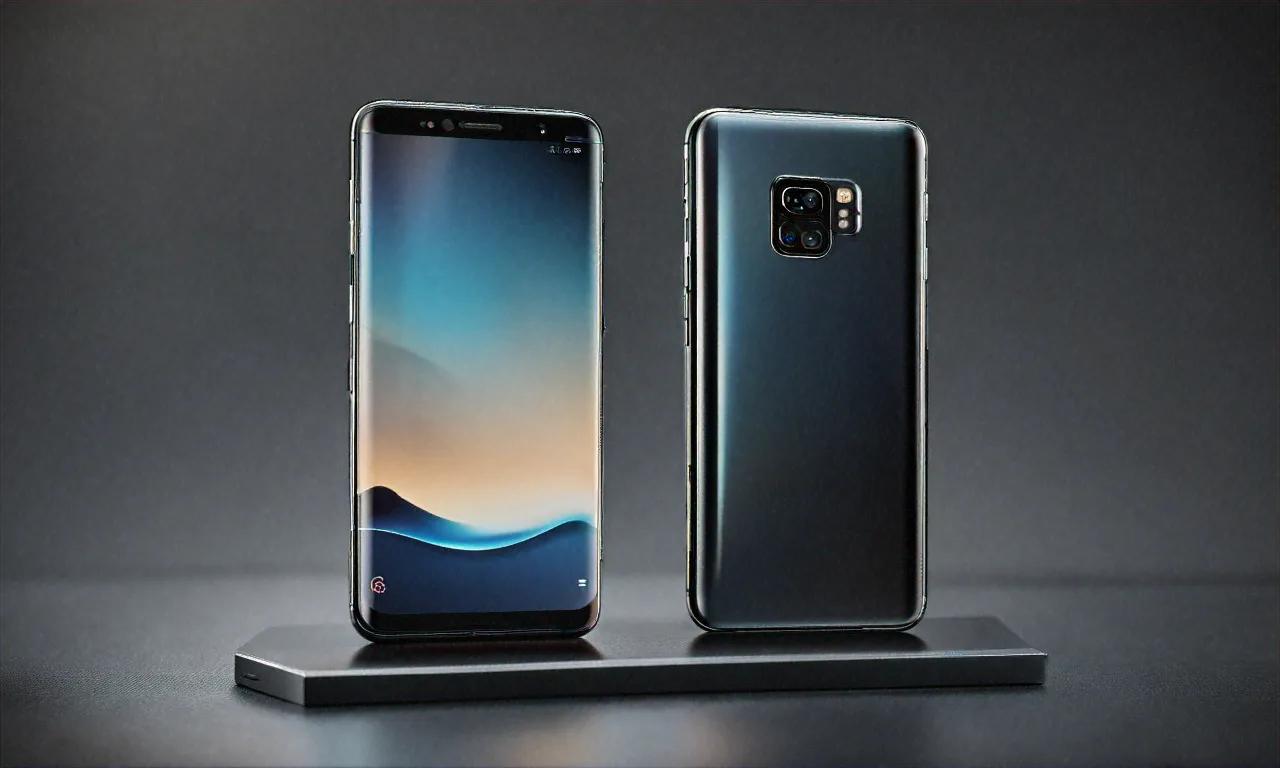
Neither of these phones is worth Rs 1,30,000-plus for most people. There, I said it. A phone half this price does 95% of what these do. But if you're reading a comparison of the iPhone 17 Pro Max and Samsung Galaxy S26 Ultra, you've already decided to spend the money, and now you just need to know which one deserves it.
I carried both phones for two weeks — iPhone as my primary the first week, Samsung for the second. Bought both myself (Rs 1,44,900 for the iPhone, Rs 1,29,999 for the Samsung) because I wanted zero manufacturer influence on what I'm about to tell you. After two weeks of living with them, swapping SIMs back and forth, shooting the same scenes with both cameras — I have opinions. Some of them surprised me too.
How They Feel in Your Hand
The iPhone 17 Pro Max went through a real design shakeup this year. Thinner titanium frame, a new ceramic-infused glass back that Apple says is four times more drop-resistant, and the whole camera situation moved to a horizontal bar spanning the full width of the phone. It's polarizing. Some people think it looks like clean futurism. Others told me it looks like a robot's eyes. I landed somewhere in the middle — grew on me after a few days, but I wouldn't call it beautiful.
Available in Natural Titanium (warm champagne tone, the one I got), White, Desert, and Black. The Natural Titanium finish is genuinely nice in person. Photos don't do it justice.
Samsung took the opposite approach — evolutionary, not revolutionary. For the full standalone take, we covered it in our Samsung Galaxy S26 Ultra review. Slightly softer corners than last year, camera lenses sitting nearly flush with the back panel, flat display without any edge curves. At 228 grams versus the iPhone's 227, they're basically twins in weight. Samsung's a touch taller and wider to accommodate the same 6.9-inch diagonal in a different aspect ratio.
The iPhone feels like a designed object. The Samsung feels like a designed tool. Neither approach is better — just different philosophies about what premium means. You hold the iPhone and think "this is nice." You hold the Samsung and think "this is capable."
Screens
Samsung wins on paper here. Higher resolution (3120 x 1440 vs 2868 x 1320), higher peak brightness (3,200 nits vs 2,800 nits outdoors). Both run adaptive refresh from 1Hz to 120Hz, both have always-on displays, both support HDR.
In practice? The differences dissolve. You need the phones side by side in harsh sunlight to notice Samsung's brightness edge, and the resolution gap is invisible at normal viewing distances. Where I did notice a real difference was color rendering. The iPhone shows colors more naturally — skin tones especially look true to life, like what your eyes actually saw. Samsung pushes saturation by default, making everything look more vivid. It's the Instagram-filter-without-a-filter effect. Samsung's "Natural" color mode dials this back, but even then, the iPhone still renders skin more accurately.
For HDR video — Dolby Vision on iPhone, HDR10+ on Samsung — both are stunning. The specific format doesn't matter much since streaming apps adapt automatically. You won't pick one over the other based on movie watching alone.
Gorilla Armor 2 on Samsung versus Ceramic Shield on iPhone. Both survived my two weeks without any scratches, which is the only meaningful test I can offer.
Processing Power and What It Means Day to Day
The A19 Pro is faster. Still. But the gap has narrowed enough that it barely matters outside of specific scenarios.
Single-core performance: iPhone leads by about 8%. Multi-core: roughly the same margin. GPU: 10-15% advantage for the iPhone. In the synthetic benchmarks — Geekbench 6, AnTuTu, 3DMark — the iPhone wins every category. No surprise there; Apple's been winning these charts for years.
But benchmarks don't capture the experience of using the phone. For every single thing I did in a normal day — texting, browsing, email, Instagram, YouTube, Google Maps, banking apps — both phones felt identically responsive. App launches were instant on both. Multitasking was smooth on both. If someone blindfolded you and handed you each phone running the same task, I seriously doubt you could tell which was which.
Where the gap shows up is sustained workloads. I ran Genshin Impact at max settings for 30 minutes on both phones while tracking frame rates:
The iPhone held a steady 60 FPS for the first ten minutes, dipped to 57-60 between minutes 10-20, and settled around 54-58 by the half-hour mark. Got warm but stayed comfortable. The Samsung started at 58-60, dropped to 53-57 by minute fifteen, and was bouncing between 48-55 by the end. It also got noticeably hot — not burning, but uncomfortable against skin.
For quick gaming sessions under 20 minutes, identical experience. For extended marathon sessions, the iPhone holds up better because the A19 Pro runs more efficiently at sustained loads. Samsung's chip generates more heat and throttles harder to compensate.
Practical speed test results I timed during my two weeks: cold boot goes to Samsung (18 seconds vs 22 — Samsung phones have always booted faster). App installs are roughly tied. 4K video export: iPhone finishes a one-minute clip in about 12 seconds, Samsung takes 15. Camera launch to first photo: iPhone at 0.6 seconds, Samsung at 0.8. All small differences that add up to... basically nothing in everyday life.
Cameras — The Part Most People Care About
Shot hundreds of photos across two weeks. Different lighting, different subjects, different times of day. Here's what I walked away thinking.
In daylight, both phones take excellent photos. The difference is processing philosophy. iPhone leans toward natural, true-to-life rendering — shadows are a bit darker, highlights are more controlled, skin tones are exceptionally accurate. It looks like a good camera captured the scene. Samsung produces punchier images: slightly more saturated colors, brighter shadows, more aggressive dynamic range processing that lifts dark areas. It looks like a good camera captured the scene and then someone gave it a quick edit.
Which is "better"? I showed comparison shots to about ten friends. Six preferred Samsung's more vivid output. Four preferred iPhone's natural rendering. Neither camp was wrong — it's taste. If you want photos that pop on WhatsApp and Instagram without editing, Samsung does that out of the box. If you want photos that look like what your eyes saw and leave room for your own edits, iPhone gets you there.
Hardware-wise: Samsung packs a 200MP main sensor, 50MP ultrawide, plus both a 10MP 3x telephoto and a 50MP 5x telephoto. Four rear cameras total. iPhone goes with a 48MP main, 48MP ultrawide, and a single 12MP 5x telephoto. Fewer cameras, but Apple's computational processing is doing heavy work behind fewer lenses.
Night photography is where things get interesting. Both phones activate their night modes automatically and use multi-frame stacking to brighten dark scenes. The iPhone produces cleaner results — noise is well-controlled, colors stay natural, there's a pleasant warmth to the images that feels real. Light sources don't blow out too badly. Samsung goes brighter overall. Shadows get pushed up more aggressively, and the AI denoising is heavy but effective. Fine detail survives despite all that processing.
In very dark conditions — barely any ambient light — Samsung's shots are brighter. But iPhone's look more like what the scene actually looked like to my eyes. I prefer the iPhone's approach. People I showed the photos to were split roughly 50/50, with a slight lean toward Samsung because "brighter" reads as "better" at first glance.
Zoom is where Samsung wins clearly. Having both a 3x and a 5x telephoto lens gives more flexibility than the iPhone's single 5x. And that 5x lens uses a 50MP sensor compared to iPhone's 12MP — so at 5x zoom, Samsung captures noticeably more detail. Below 5x, they're comparable since both crop from the main sensor. At extreme ranges like 30x, Samsung's Space Zoom produces more usable results, though both are clearly pushing digital enhancement at that point.
Video recording tilts toward iPhone, and it's probably the biggest gap in this whole comparison. Dolby Vision HDR recording up to 4K 60fps, ProRes support for professional workflows, and stabilization that makes handheld footage look gimbal-smooth. Footage from the iPhone looks more cinematic straight out of the camera. Samsung can shoot 8K at 30fps, which sounds impressive until you realize the files are massive, almost no displays show 8K content, and 4K 60fps from Samsung is actually better quality due to better processing at that resolution. If video matters to you — really matters — the iPhone is the phone to get.
Battery and Charging
Samsung has the bigger battery at 5,500 mAh versus iPhone's 4,685 mAh. But screen-on time tells a different story: I consistently got 8-9 hours from the iPhone and 7-8 from the Samsung with mixed daily use. Apple's power efficiency advantage — the A19 Pro chip plus iOS optimization — more than makes up for the capacity gap.
Samsung charges faster over a wire. Its larger battery goes from flat to full in roughly 55 minutes. The iPhone takes about 80 minutes. Samsung also boots faster. But the iPhone has faster wireless charging through MagSafe at 25W versus Samsung's Qi2 at 15W.
Neither phone charges as fast as the Chinese competition — OnePlus does 100W, Xiaomi does 120W. Both Apple and Samsung are prioritizing long-term battery health over speed, which is a reasonable trade-off for a phone you're probably keeping for four or five years.
Software — The Philosophical Divide
iOS 19 is iOS. If you've used an iPhone before, you know exactly what you're getting. Consistent, polished, smooth. Apps tend to be higher quality because Apple enforces standards. iMessage and FaceTime create a communication ecosystem that works beautifully if your contacts are also on iPhone (less so if they aren't, which in India is a real consideration). Privacy features — App Tracking Transparency, Privacy Reports, Mail Privacy Protection — are genuinely industry-leading. Apple Intelligence features are integrated throughout.
What iOS still won't give you: deep customization, real sideloading (India doesn't have the EU's alternative app store mandate yet), full default app replacement, or a file system that doesn't make you want to throw the phone. Six-plus years of updates, though, which is excellent.
One UI 7 on the Samsung is the opposite philosophy — feature density turned up to eleven. Good Lock modules let you reshape the entire interface. Samsung DeX gives you a desktop experience with a monitor. Split-screen and floating windows are more capable than anything on iOS. Galaxy AI handles live translation, call transcription, and summarization impressively well. S Pen integration for notes and annotations.
Samsung promises 7 years of OS and security updates — one year more than Apple's commitment. That's class-leading and means the S26 Ultra would receive updates through 2033.
The downside: more pre-installed apps out of the box, including Samsung's own duplicates of Google apps and whatever the carrier added to Indian units. Notifications are more chaotic. Some UI inconsistency across first-party and third-party apps. Galaxy Store feels redundant next to Google Play.
Pick based on what you value. Clean and controlled? iPhone. Flexible and feature-packed? Samsung. Both are mature, stable platforms. Neither will frustrate you.
Ecosystem and What It Costs You
This is the thing nobody in India talks about enough. Your phone choice is increasingly a commitment to a whole ecosystem of products and services.
If you own a MacBook, iPad, Apple Watch, and AirPods — the iPhone connects all of them in ways that feel almost magical. Handoff, Universal Clipboard, AirDrop, Apple Watch pairing. But Apple products are expensive in India. A MacBook Air starts at Rs 99,900. AirPods Pro cost Rs 24,900. The ecosystem tax adds up fast.
Samsung's ecosystem — Galaxy Buds, Galaxy Watch, Galaxy Tab, Galaxy Book — integrates reasonably well through Quick Share and Samsung account syncing. Not as tight as Apple's integration, but noticeably better than it was two years ago. And Android's openness means you don't have to stay inside Samsung's walls. A Samsung phone works perfectly fine with Sony earbuds, a Lenovo laptop, and a Wear OS watch from any manufacturer. You're less locked in, which some people value more than tighter integration.
Pricing in India and Value
Samsung is cheaper at every tier:
| Storage | iPhone 17 Pro Max | Galaxy S26 Ultra |
|---|---|---|
| 256GB | Rs 1,44,900 | Rs 1,29,999 |
| 512GB | Rs 1,59,900 | Rs 1,41,999 |
| 1TB | Rs 1,79,900 | Rs 1,65,999 |
That's Rs 15,000-16,000 less across the board. Factor in the exchange deals and bank discounts Samsung runs more aggressively during sale events, and the effective gap can stretch to Rs 20,000-25,000. On pure value, Samsung wins and it's not subtle.
What I'd Actually Buy
For someone entering the flagship market fresh — no existing ecosystem, no strong loyalty — I'd suggest the Samsung Galaxy S26 Ultra. You save fifteen grand minimum, get a more flexible camera with better zoom, get the S Pen for notes and productivity, get 7 years of updates, and Samsung's software has gotten genuinely good. That's a lot of phone for the money.
If you already own Apple products — a Mac, an iPad, AirPods, maybe an Apple Watch — switching to Samsung means giving up integration features you probably rely on daily. The iPhone's ecosystem glue is real and hard to replace. Stick with what connects to everything you already own.
For a wider look at the full flagship market, our best smartphones of 2026 roundup covers all the top options across price points. Both of these phones are extraordinary. The "wrong" choice is still one of the finest pieces of technology you can carry in your pocket and it'll serve you well for years.
Anurag Sharma
Founder & Editor
Founder and editor of Tech Tips India. Writes hands-on tech guides, reviews, and explainers focused on the Indian context — real rupee pricing, local availability, and practical setups tested before publishing.
Stay Ahead in Tech
Get the latest tech news, tutorials, and reviews delivered straight to your inbox every week.
No spam ever. Unsubscribe anytime.
Comments (0)
Leave a Comment
All comments are moderated before appearing. Please be respectful and follow our community guidelines.
Related Articles
iPad Pro M4 vs Samsung Tab S10 Ultra Compared
iPad Pro M4 vs Samsung Tab S10 Ultra: display, performance, stylus, multitasking, apps, and value for money in India.
Electric vs Petrol Cars in India: Cost Compared
Electric vs petrol car cost comparison in India covering purchase price, charging, maintenance, insurance, and government subsidies.
Best Smartphones to Buy in India - February 2026
Our top picks for the best smartphones across all price ranges in India. From budget to flagship, find your perfect phone.