Best Home Projectors in India: Complete Guide
A complete guide to the best home projectors in India across budget, mid-range, and premium segments, with tips on throw distance, lumens, and room setup.
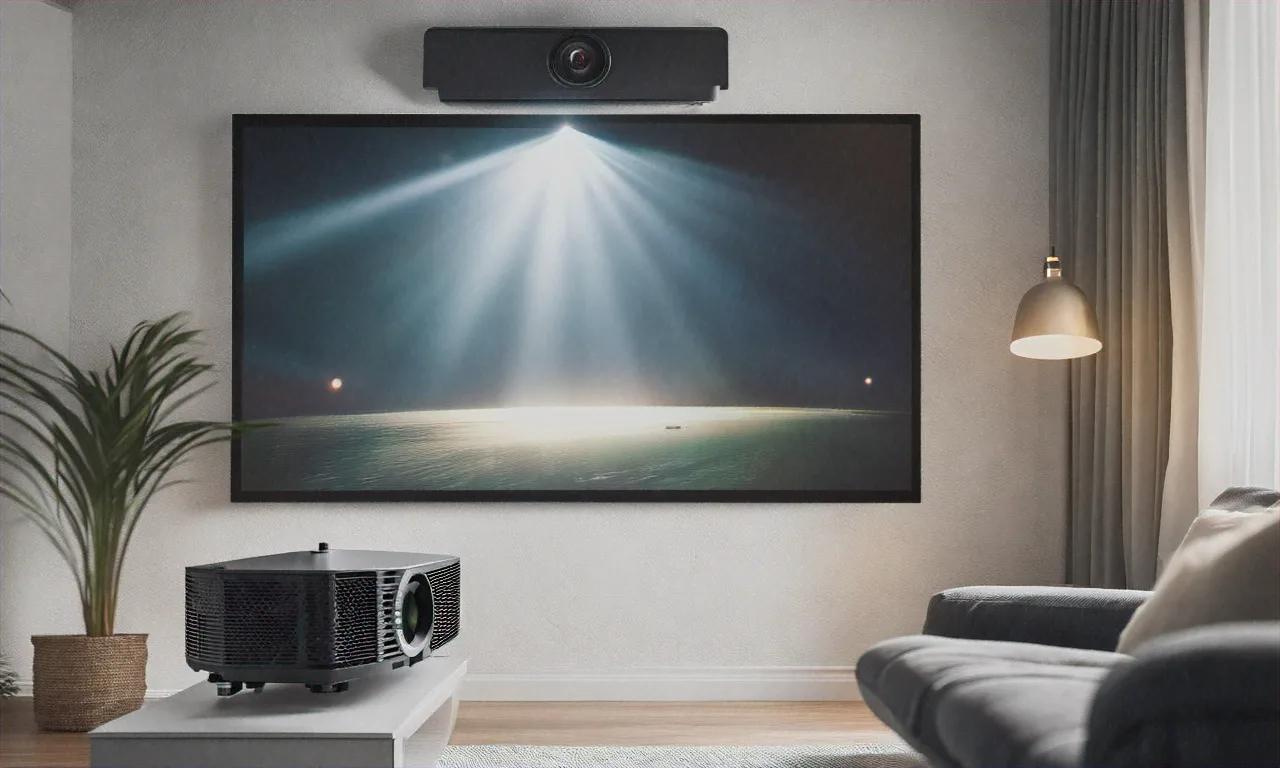
Picture This: A Friday Night With a 100-Inch Screen
Last Friday, I dragged my mattress into the living room, hung a white bedsheet on the wall (yes, literally), tossed some cushions on the floor, and fired up the projector. My wife made popcorn. My kid picked the movie — some animated thing about a dragon, I think. And for those two hours, our cramped 12x14 living room in Pune felt like a private cinema. No sticky floors. No overpriced samosas. Just us, a wall of color, and the satisfying hum of a Rs 10,000 machine doing things my 43-inch TV could never do.
That's how the projector bug got me. It wasn't some big planned purchase. I grabbed a budget Portronics model on a whim during a Flipkart sale about two years ago — maybe Rs 8,000. Honestly? Colors looked washed out. Fan sounded like a small aircraft. I had to watch movies with every curtain in the room shut tight. But I still preferred it over the TV. Something about a 100-inch picture taking over your entire wall changes the whole experience. There's no going back.
Since then, I've tested over a dozen projectors across every price range, from Rs 5,000 budget models to Rs 2,00,000+ premium units. And the market in India has absolutely exploded in the last couple of years. You can now get a genuinely decent 1080p projector for under Rs 30,000 — something that would've been unthinkable in 2022.
So if you're thinking about upgrading your movie nights, cricket watch parties, or gaming sessions, here's everything I know about picking the right projector for an Indian home. If you're building out a complete entertainment setup, our smart home setup guide for India covers how to integrate a projector with the rest of your connected devices.
Specs That Actually Matter (and Ones That Don't)
Before we get into specific models, you need to understand a few numbers. Projector specs are confusing because manufacturers love to exaggerate, and the terminology isn't always intuitive. Let me break it down.
Lumens: How Bright Is Bright Enough?
Lumens measure brightness. Probably the single most important spec for any projector. In a perfectly dark room, even 500 lumens looks decent. But Indian homes rarely have perfect blackout conditions — there's usually some ambient light leaking in from windows, doors, or that one tubelight in the hallway that someone always leaves on.
Here's a rough guide:
| Lumens Range | Best For |
|---|---|
| 200-800 | Dark rooms only, nighttime use |
| 800-2000 | Moderately lit rooms, curtains drawn |
| 2000-3500 | Living rooms with some ambient light |
| 3500+ | Well-lit rooms, daytime viewing |
Important: Many budget Chinese projectors advertise "9000 lumens" or "12000 lumens" on Amazon. Those numbers are completely fabricated. They're measuring "light source lumens" or some made-up metric. Real ANSI lumens for a Rs 10,000 projector will be around 200-400. Always look for ANSI lumens specifically. Don't fall for the inflated numbers.
Throw Distance and Screen Size
Throw distance is how far the projector needs to sit from the wall to create a certain screen size. Matters a lot in Indian apartments where rooms are typically 10-15 feet long. Can't ignore this one.
A standard throw projector needs about 8-10 feet of distance for a 100-inch image. A short throw projector can do the same from 4-5 feet. Ultra-short throw (UST) projectors sit just inches from the wall — perfect for small rooms but significantly more expensive.
For most Indian living rooms (10x12 or 12x14 feet), a standard throw projector works fine for screen sizes between 80 and 120 inches. Measure your room before buying. Seriously. I've seen people order a projector only to realize their room's too short for a decent image size.
Resolution: 1080p vs 4K
Skip anything below 1080p. Just skip it. Those "HD Ready" 720p projectors might seem tempting at budget prices, but on a large screen, the pixel grid is painfully visible. You wouldn't buy a 720p TV in 2026, so don't buy a 720p projector either.
1080p (1920x1080) is the sweet spot for most buyers. At 100 inches, it looks sharp from normal viewing distances (8-10 feet). 4K projectors exist and look stunning, but they start at Rs 1,00,000+ and the content ecosystem for 4K in India is still limited to Netflix, Amazon Prime, and some YouTube videos. I suspect most people won't notice a massive difference between a good 1080p projector and a budget 4K one at normal viewing distances anyway.
Light Source: Lamp vs LED vs Laser
| Technology | Lifespan | Brightness | Cost | Maintenance |
|---|---|---|---|---|
| Lamp | 3,000-5,000 hours | High (2000+ lumens) | Low upfront, replacement bulbs costly | Bulb replacement needed |
| LED | 20,000-30,000 hours | Medium (500-2000 lumens) | Medium | Virtually maintenance-free |
| Laser | 20,000-30,000 hours | High (2000+ lumens) | High upfront | Virtually maintenance-free |
LED projectors have improved dramatically and now dominate the budget-to-mid-range segment. They run cooler, quieter, and the light source lasts the lifetime of the projector. Laser is the premium choice — brighter than LED with the same longevity. Traditional lamp projectors still win on raw brightness per rupee but need bulb replacements every few thousand hours (bulbs cost Rs 3,000-10,000 depending on the model). Not sure if the savings on lamp projectors are worth the hassle of sourcing replacement bulbs down the road, especially in smaller cities.
Budget Projectors (Under Rs 15,000)
Let me be upfront: budget projectors involve trade-offs. You won't get reference-quality color accuracy or room-filling brightness. But for nighttime movie watching in a dark room, they can be genuinely enjoyable. And at these prices, you're risking less than you'd spend on a fancy dinner for four.
Portronics Beem 460
- Price: Rs 9,999
- Resolution: Native 1080p
- Brightness: 300 ANSI lumens
- Light Source: LED (20,000 hours)
- Connectivity: HDMI, USB, Wi-Fi, Bluetooth
- Built-in OS: Android TV
Portronics has carved out a niche in the Indian budget projector market, and the Beem 460 is their best offering yet. Native 1080p at this price? Excellent. Most competitors in this bracket offer 720p with "1080p supported" marketing speak, which just means they can accept a 1080p input signal and downscale it. Sneaky.
Built-in Android TV is sluggish but functional enough for Netflix and YouTube. I'd recommend connecting a Fire TV Stick for a smoother experience. Makes a world of difference.
Zebronics PIXAPLAY 22
- Price: Rs 12,499
- Resolution: Native 1080p
- Brightness: 350 ANSI lumens
- Light Source: LED
- Connectivity: HDMI x2, USB, AUX, Wi-Fi
- Built-in OS: Android 9
Slightly brighter than the Portronics, and the Zebronics model has a noticeable edge in color accuracy out of the box. Dual HDMI ports are a nice touch if you want to keep both a streaming stick and a gaming console connected without swapping cables. Keystone correction is digital (not optical), so expect some softness if you can't mount the projector directly in front of the screen. Fan noise is audible but not distracting at normal movie volumes.
I think this one's the better pick for families who'll use it casually — movie nights, YouTube on the big screen, that sort of thing.
EGate i9 Pro Max
- Price: Rs 14,999
- Resolution: Native 1080p
- Brightness: 400 ANSI lumens
- Light Source: LED
- Built-in Speaker: 5W stereo
Brightest of the budget bunch, and it shows. Images are visibly punchier compared to the Portronics and Zebronics models. EGate has decent after-sales support in India with service centers in major cities, which matters more than you might think — projector bulb and lens issues are hard to fix without official parts. Good pick if you want the best image quality under Rs 15,000 and don't mind spending every rupee of that budget.
Mid-Range Projectors (Rs 30,000 - Rs 80,000)
Here's where things get exciting. Projectors in this range stop being a compromise and start being genuinely impressive. You get real brightness, proper color calibration, and features that actually work the way they're supposed to.
BenQ TH585P
- Price: Rs 52,000
- Resolution: Native 1080p
- Brightness: 3,500 ANSI lumens
- Light Source: Lamp (15,000 hours in Eco mode)
- Input Lag: 16ms at 1080p/60Hz
- Connectivity: HDMI x2, VGA, USB
I recommend this projector more than any other. Full stop. BenQ has been making projectors for decades, and the TH585P shows that experience. 3,500 ANSI lumens means you can use it with ambient light — during IPL matches in a room with curtains partially open, images are still clearly visible. Love that.
What really stands out is the 16ms input lag, which makes it suitable for console gaming too. That's a rare combination at this price. No smart features built in, so you'll need a streaming device, but that's actually preferable since smart OS on projectors tends to be underpowered and abandoned after a year of updates.
Lamp technology means you'll eventually need a replacement bulb, but in Eco mode, the bulb lasts 15,000 hours. Watching 3 hours daily, that's nearly 14 years. You'll replace the projector before the bulb dies. Probably twice.
Epson EF-21
- Price: Rs 64,000
- Resolution: Native 1080p
- Brightness: 1,200 ANSI lumens
- Light Source: Laser
- Built-in OS: Android TV
- Audio: 5W Yamaha-tuned speakers
Epson's compact laser projector is built for style-conscious buyers. Small enough to sit on a bookshelf. Looks like a premium Bluetooth speaker rather than a projector. Laser light source means instant on/off (no warm-up time like lamp projectors) and a 20,000-hour lifespan. Yamaha-tuned speakers are surprisingly decent — not home theater quality, but good enough for casual viewing without plugging in an external speaker.
Brightness is lower than the BenQ, so it's better suited for dedicated home theater rooms rather than bright living rooms. But the image quality is beautiful — colors are vivid, blacks are deep, and the auto-focus/auto-keystone works remarkably well. Seems like Epson put real engineering effort into the auto-correction here.
Xgimi Halo+
- Price: Rs 72,000
- Resolution: Native 1080p
- Brightness: 900 ANSI lumens
- Light Source: LED
- Built-in OS: Android TV 11
- Audio: Harman Kardon speakers
- Special: Built-in battery (2+ hours)
Here's the one I take to friends' houses. It's got a built-in battery that lasts over two hours, making it truly portable. Set it up on a terrace for a movie under the stars. Bring it to a farmhouse for a weekend trip. Move it between rooms without worrying about power outlets. Freedom.
Harman Kardon speakers are genuinely good — better than any external Bluetooth speaker under Rs 5,000. Android TV 11 runs smoothly with Google Assistant built in. At Rs 72,000 it isn't cheap, but for the versatility you're getting, I think it justifies the price for anyone who doesn't want their projector bolted to a ceiling permanently.
Premium Projectors (Rs 1,00,000+)
If budget isn't a primary constraint and you want a real cinema experience at home, these projectors deliver performance that makes a 65-inch OLED TV look small. Literally.
Samsung The Freestyle 2
- Price: Rs 89,000
- Resolution: Native 1080p
- Brightness: 550 ANSI lumens
- Light Source: LED
- Built-in OS: Tizen
- Special: 360-degree rotation, auto-leveling
Samsung's Freestyle 2 is more lifestyle product than traditional projector. Incredibly compact. Rotates 360 degrees on its base. Auto-levels the image regardless of the surface it's placed on. Tizen OS means smooth integration with Samsung smartphones and SmartThings. Brightness is modest, but the auto-focus and auto-keystone are the best I've tested — point it at any surface and it adjusts perfectly within seconds.
Not sure if it's the best value for pure image quality at this price. But for someone who values design, portability, and that "wow" factor when friends come over, it might be worth it.
LG CineBeam HU715Q
- Price: Rs 1,85,000
- Resolution: Native 4K
- Brightness: 2,500 ANSI lumens
- Light Source: Laser
- Built-in OS: webOS
- Special: Ultra-short throw
An ultra-short throw 4K laser projector. Place it 7 inches from the wall and get a 100-inch 4K image. Seven inches. For homes where ceiling mounting isn't possible and you don't have 10 feet of throw distance, UST is the only option, and the LG CineBeam is the best value UST in India right now. 4K resolution at this screen size is breathtaking — you can see individual blades of grass in cricket matches and every pore in movie close-ups.
Worth every paisa if your room demands UST.
Sony VPL-XW5000ES
- Price: Rs 3,50,000
- Resolution: Native 4K (SXRD panels)
- Brightness: 2,000 ANSI lumens
- Light Source: Laser
- Special: True native 4K, HDR tone mapping
Money no object? Want the absolute best picture quality money can buy? Here you go. Sony's SXRD technology delivers native 4K (not pixel-shifted like most "4K" projectors), exceptional HDR performance, and color accuracy that satisfies even professional colorists. A dedicated home theater projector — no smart features, no built-in speakers. You pair it with a proper AV receiver and surround sound system.
Image is so sharp and detailed that it genuinely competes with high-end OLED TVs while offering a 120-inch+ screen size. I've only spent a few hours with this one at a demo, but it's arguably the closest thing to an actual cinema I've experienced in someone's home.
Comparison Table: Quick Reference
| Model | Price (Rs) | Resolution | Lumens | Source | Smart OS | Best For |
|---|---|---|---|---|---|---|
| Portronics Beem 460 | 9,999 | 1080p | 300 | LED | Android TV | Budget dark room |
| Zebronics PIXAPLAY 22 | 12,499 | 1080p | 350 | LED | Android 9 | Budget all-rounder |
| EGate i9 Pro Max | 14,999 | 1080p | 400 | LED | Android | Best budget brightness |
| BenQ TH585P | 52,000 | 1080p | 3,500 | Lamp | None | Best mid-range overall |
| Epson EF-21 | 64,000 | 1080p | 1,200 | Laser | Android TV | Compact + stylish |
| Xgimi Halo+ | 72,000 | 1080p | 900 | LED | Android TV 11 | Portable with battery |
| Samsung Freestyle 2 | 89,000 | 1080p | 550 | LED | Tizen | Lifestyle/portability |
| LG CineBeam HU715Q | 1,85,000 | 4K | 2,500 | Laser | webOS | Best UST value |
| Sony VPL-XW5000ES | 3,50,000 | 4K | 2,000 | Laser | None | Best picture quality |
Room Setup Tips for Indian Homes
Getting the projector is half the battle. Maybe less than half. Setting up your room properly is what separates a "meh" experience from a "wow, this is better than a theater" experience. I can't stress this enough — a Rs 15,000 projector in a well-prepared dark room will look better than a Rs 50,000 projector in a poorly set-up bright room.
Wall Color Matters
A white or light gray wall works perfectly as a projection surface. You don't necessarily need a dedicated screen, especially with mid-range and premium projectors. If your wall has a matte finish, even better. Glossy or textured walls create hotspots and uneven brightness — you'll notice bright spots in the center and dimness at the edges.
If you do want a screen, the Elcor Manual Pull-Down screens (available on Amazon India for Rs 2,000-5,000 depending on size) are the best budget option. For motorized screens, Liberty Grandview offers decent options starting at Rs 15,000.
Dealing with Ambient Light
Indian homes are typically bright — large windows, balcony doors, and that afternoon sun that blasts through curtains. A few practical solutions:
- Blackout curtains from brands like Solimo or Story@Home cost Rs 500-1,500 per window and make a dramatic difference
- ALR (Ambient Light Rejecting) screens are designed to reject light from above and sides, only reflecting light from the projector's direction. They cost significantly more (Rs 15,000-50,000) but allow daytime viewing with mid-range projectors
- Paint the ceiling dark if possible — a white ceiling reflects ambient light back onto the screen, reducing contrast
Don't underestimate blackout curtains. They're the cheapest upgrade with the biggest impact. Rs 1,000 on curtains might make your projector image look like you spent Rs 10,000 more on the projector itself.
Audio Solutions
Built-in projector speakers are acceptable for casual viewing, but for movie nights, you want external audio. Here are my recommendations at different budgets:
- Rs 2,000-5,000: A soundbar like the Zebronics Juke Bar 3900 Pro or boAt Aavante Bar 1180 gives you a solid upgrade
- Rs 5,000-15,000: The JBL Bar 2.0 All-in-One or Sony HT-S20R 5.1 channel system
- Rs 15,000+: A proper 5.1 or 7.1 AV receiver setup with bookshelf speakers
Connect audio via HDMI ARC from your streaming device, or use Bluetooth from the projector. Optical cable is another option if your projector supports it. I'd personally go with the wired connection for zero latency — Bluetooth audio delay during movies can be annoying once you notice it.
Mounting Options
Ceiling mounting gives you the cleanest setup — the projector's out of the way, cable management is hidden, and you don't have to worry about someone walking in front of the lens during a tense scene. Universal ceiling mounts cost Rs 500-2,000 on Amazon. Just make sure your ceiling can handle the weight (most can — projectors rarely weigh more than 3-4 kg).
If ceiling mounting isn't an option (rented apartment, for example), a tall bookshelf or a dedicated projector stand works. Some people mount them on a wall shelf behind the seating area. Get creative. I've seen someone use a sturdy plant stand and it worked brilliantly.
My Personal Recommendation
If I had to pick one projector for most Indian homes, it'd be the BenQ TH585P at Rs 52,000. Bright enough for rooms with ambient light. Image quality is excellent. Supports gaming with low input lag. BenQ's reliability and service network in India is the best among projector brands. Pair it with a Fire TV Stick 4K Max and a decent soundbar, and you've got a home theater setup that genuinely rivals the multiplex experience — for the price of about 50 movie tickets.
If you need a laptop to connect to your projector, we have a roundup of the best budget laptops in India under Rs 50,000 that make great media companions. For budget buyers who just want to try the projector experience, the EGate i9 Pro Max at Rs 14,999 is the one to get. Set it up in a dark room, connect your laptop or streaming stick, and enjoy the magic of a 100-inch picture. You might never go back to your TV. I'm serious.
And for those who want the ultimate experience without a six-figure budget, the Xgimi Halo+ offers the best combination of portability, audio quality, and smart features. Built-in battery and Harman Kardon speakers make it the most flexible projector on this list.
Your Room Matters More Than Your Specs
Here's the thing nobody tells you in those YouTube review videos: your room setup matters more than the projector's spec sheet. A dark room with blackout curtains, a matte white wall, and a decent external speaker will make even a Rs 10,000 projector look fantastic. Conversely, dropping Rs 2 lakh on a premium projector and then pointing it at a glossy cream wall in a sunlit living room will leave you disappointed.
Before you obsess over ANSI lumens and contrast ratios, walk into the room where you'll be watching. Look at the walls. Check the windows. Think about where you'll sit. Measure the throw distance. That fifteen minutes of planning will probably improve your experience more than spending an extra Rs 20,000 on a higher-end model.
Whichever route you go, I promise you this: once you watch a movie or a cricket match on a 100-inch projected screen, your TV is going to feel very, very small. And that bedsheet-on-the-wall Friday night? It might just become your family's favorite tradition. It's become ours.
Anurag Sharma
Founder & Editor
Founder and editor of Tech Tips India. Writes hands-on tech guides, reviews, and explainers focused on the Indian context — real rupee pricing, local availability, and practical setups tested before publishing.
Stay Ahead in Tech
Get the latest tech news, tutorials, and reviews delivered straight to your inbox every week.
No spam ever. Unsubscribe anytime.
Comments (0)
Leave a Comment
All comments are moderated before appearing. Please be respectful and follow our community guidelines.
Related Articles
WhatsApp Tips and Hidden Features for Indians
WhatsApp hidden features: chat lock, formatting tricks, storage tips, privacy settings, and power user shortcuts.
Home NAS Setup in India: Complete Storage Guide
Build a home NAS in India: Synology vs QNAP vs DIY, RAID configurations, TrueNAS vs OpenMediaVault, and full budget breakdown.

Tech Salaries in India 2026: Real Numbers by Role
Real salary data for developers, DevOps, data scientists, and PMs across Bangalore, Hyderabad, Pune, and Delhi NCR in 2026.