Indian Startup Funding in 2026: Where the Money Is Flowing
India's 2026 startup funding: hottest sectors, biggest deals, new unicorns, micro-VCs, and practical advice for founders raising capital.
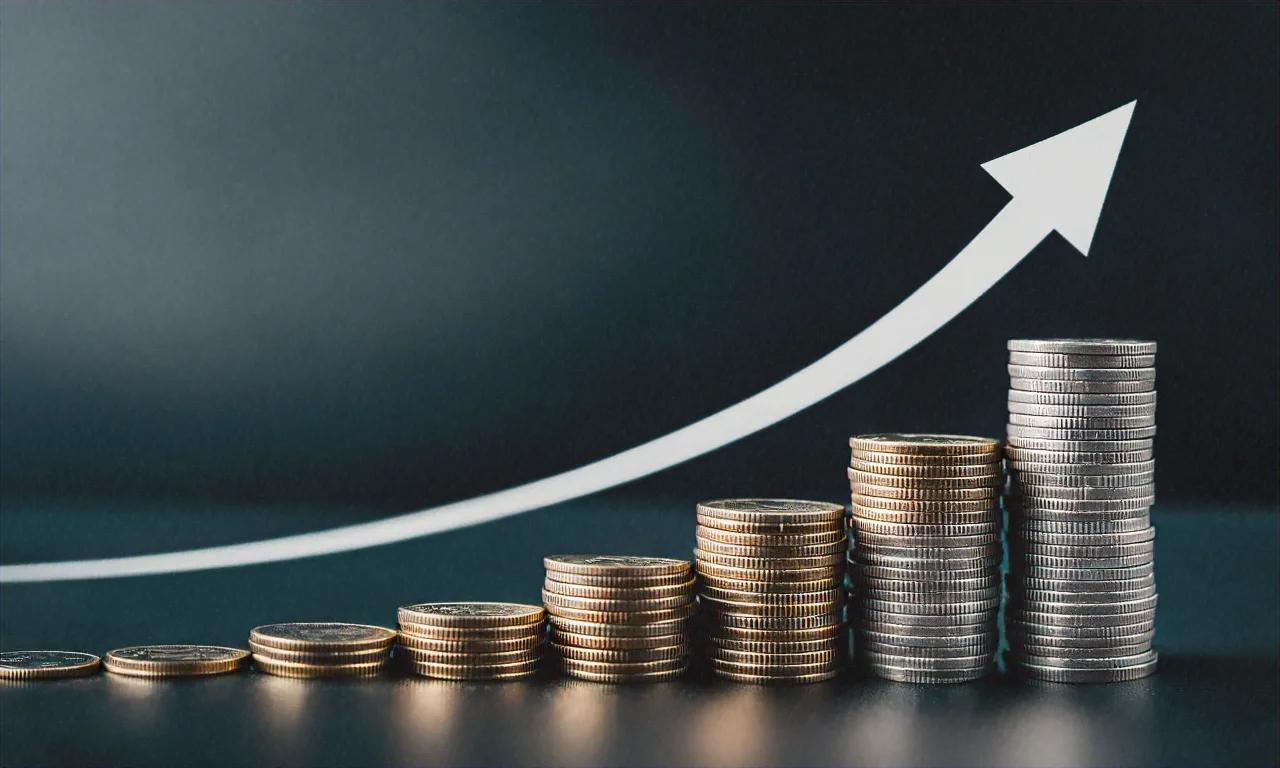
40% of Funded Indian Startups Are Now Profitable
Read that number again. In 2021, only about 15% of funded startups could say the same thing. That single data point tells you more about what's happened to the Indian startup ecosystem in five years than any thinkpiece or VC blog post ever could.
Remember 2022-2023? Every other headline screamed about startup layoffs, down-rounds, and VCs suddenly discovering that burning cash isn't a business model. That period was painful. Funding dropped nearly 70% from the 2021 peak. Valuations crashed hard. Hundreds of startups shut down. Founders who'd been told to "focus on growth" were suddenly asked to "show me your unit economics" — a whiplash that destroyed companies overnight.
Two years later, the picture looks dramatically different. Indian startup funding in 2025 rebounded to approximately $14 billion, and early data for 2026 suggests we're on track for $16-18 billion. But — and this matters a lot — the money is flowing differently now. Spray-and-pray investing? Gone. Insane valuations for pre-revenue companies? Dead. Growth-at-all-costs mentality? Buried. What replaced it is more disciplined, more thoughtful, and I think honestly more healthy for everyone involved.
I've been tracking Indian startup funding closely for this publication, speaking with founders, angel investors, and VC partners over the past several months. Patterns are clear. And they tell a really interesting story about where Indian tech is headed.
Top Funded Sectors in 2026
1. AI and Machine Learning
No surprise here. AI is the hottest sector in startup funding globally, and India's no exception. But the Indian AI scene has a distinct character — rather than trying to build foundational models (that game requires billions of dollars and is dominated by US companies with access to massive compute), Indian AI startups focus on applications and going vertical.
Where the money's going:
- AI-powered SaaS products — Customer support automation, sales intelligence, document processing
- AI for healthcare — Diagnostic tools, drug discovery assistants, clinical trial optimization
- AI infrastructure — Model deployment platforms, data labelling, MLOps tools
- Generative AI applications — Content creation tools, code assistants, design automation
- AI for Indian languages — Translation, transcription, and NLP for Hindi, Tamil, Telugu, Bengali, and other Indian languages
Notable AI deals in the past year include Sarvam AI raising a large Series A for building foundational AI models for Indian languages, Krutrim (Ola's AI venture) continuing to attract investment, and a wave of seed-stage companies building AI tools for specific industries like legal tech, agriculture, and education.
Total AI/ML funding in Indian startups crossed $3 billion in 2025, and 2026 is on pace to exceed $4 billion. Arguably the most interesting sector to watch right now.
2. Climate Tech and Clean Energy
This might be the most surprising trend of 2026. Climate tech was barely on VCs' radar three years ago. Now it's the second-largest sector by funding volume. What happened?
Several factors are driving this:
- India's renewable energy targets — Government committed to 500GW of renewable energy capacity by 2030, creating enormous market opportunity
- Carbon credit markets — Indian startups building carbon credit verification, trading, and management platforms are seeing strong demand
- EV infrastructure — Charging networks, battery swapping, and fleet management
- Green hydrogen — Early-stage but attracting significant interest from deep-tech investors
- Sustainable packaging and materials — Replacing single-use plastics with biodegradable alternatives
Companies like BluSmart (electric ride-hailing), Euler Motors (electric commercial vehicles), and Log9 Materials (advanced battery technology) have all raised substantial rounds. Climate tech attracted over $2 billion in Indian startup funding in 2025. I suspect that number will jump again this year.
3. Fintech
Fintech remains a perennial favourite for Indian VCs, though the focus has shifted dramatically. Consumer payments? That market's largely captured by PhonePe, Google Pay, and Paytm. Good luck competing there. Where the money's flowing instead:
- B2B payments and invoicing — Helping businesses manage cash flow
- Lending tech — Using alternative data for credit scoring, embedded lending
- Insurance tech — Distribution, claims processing, and micro-insurance
- Wealth tech — Automated portfolio management, fractional investing
- Cross-border payments — Helping Indian freelancers and exporters receive international payments
UPI continues to be a springboard for fintech innovation. Monthly UPI transactions crossed 18 billion in late 2025, and startups building on top of UPI rails — for recurring payments, credit, and merchant services — are among the best-funded. That ecosystem probably has years of growth left.
4. Health Tech
COVID accelerated telemedicine adoption in India, and that momentum hasn't faded. Health tech funding in 2025 reached approximately $1.5 billion, with particular strength in:
- Digital health platforms — Teleconsultation, health records, preventive care
- Diagnostic AI — Radiology, pathology, and ophthalmology AI assistants
- Mental health — Online therapy platforms and workplace wellness
- Hospital management SaaS — Operational efficiency tools for Indian hospitals
- Pharmacy and drug delivery — Continuing to scale post-COVID
Practo, PharmEasy, and MFine are established players, but the new wave includes companies like Niramai (AI-based breast cancer screening) and Dozee (contactless remote patient monitoring) that are using technology to solve distinctly Indian healthcare challenges — particularly access in rural areas where doctors are scarce and hospitals are hours away.
5. SaaS (Software as a Service)
Indian SaaS continues its quiet but powerful trajectory. India produced over 40 SaaS unicorns by 2025, and the pipeline shows no signs of slowing. What's changing is the type of SaaS company getting funded:
- Vertical SaaS — Software built for specific industries (construction, logistics, agriculture, legal) rather than horizontal tools trying to be everything for everyone
- AI-native SaaS — Products where AI is the core value proposition, not an afterthought bolted on
- India-first SaaS — Products built specifically for the Indian market, priced for Indian buyers, solving Indian problems
- Developer tools — APIs, SDKs, and platforms for developers building on Indian infrastructure (Aadhaar, UPI, DigiLocker)
Total SaaS funding was roughly $2.5 billion in 2025. Companies like Postman, Chargebee, BrowserStack, and Freshworks continue to grow, while a new crop of seed and Series A companies targets niches that larger players have overlooked. Seems like there's always room for someone who goes narrow and deep.
Profitability: How the Game Changed Completely
Here's the single biggest shift in the Indian startup ecosystem since 2021. Investors have gone from asking "How fast can you grow?" to asking "When will you be profitable?" Night and day.
Numbers tell the story clearly:
| Metric | 2021 | 2023 | 2026 |
|---|---|---|---|
| Median revenue multiple (Series A) | 40-60x | 15-20x | 10-15x |
| % of funded startups that are profitable | ~15% | ~25% | ~40% |
| Median time to profitability expectation | "Eventually" | 3-4 years | 18-24 months |
| Importance of unit economics at seed | Low | Medium | High |
Founders who raised during the 2021 boom at 50-80x revenue multiples have faced painful down-rounds or been forced to grow into their valuations. The lesson's been internalized across the entire ecosystem: high growth without a path to profitability isn't a venture-backable business. It's a venture-subsidised experiment, and the subsidy has dried up.
Positive side? Surviving startups are genuinely stronger. Their business models are sounder. Customer acquisition is more efficient. Teams are leaner. Indian startup ecosystem in 2026 is smaller by company count than 2021, but it's deeper in quality. I'd rather invest in this version of the ecosystem any day.
Angel Investing Gets Serious
Angel investing in India has evolved from a club of wealthy individuals writing occasional cheques to a structured, professionalized ecosystem. Here's what's happening:
Key Trends
Syndicate platforms are thriving. Platforms like AngelList India, LetsVenture, and 1stCheque have made it possible for smaller investors (starting at Rs 1-2 lakh) to participate in startup deals. These syndicates pool capital from multiple angels, letting individual investors diversify across many startups while putting in relatively small amounts. That accessibility is probably changing who gets to be an angel investor in ways we haven't fully appreciated yet.
Operator angels are everywhere. Senior tech professionals — CTOs, VPs of Engineering, product leaders at companies like Flipkart, Swiggy, Razorpay, and Zerodha — are becoming active angel investors. They bring not just capital but operational expertise, introductions, and credibility. For founders, an angel cheque from a well-known operator can be more valuable than a larger cheque from an unknown investor. Name recognition opens doors that money alone can't.
Average angel round size has increased. In 2021, a typical angel round was Rs 25-50 lakh. In 2026, it's Rs 50 lakh to Rs 2 crore. Reflects both higher startup capital needs and increased angel investor confidence.
Angel tax concerns have eased. Government's amendment to Section 56(2)(viib) of the Income Tax Act, which previously taxed startups on shares issued above "fair market value," has been rationalized. DPIIT-recognised startups are now largely exempt, removing a major deterrent that was genuinely scaring people away from angel investing in India.
Active Angel Networks
| Network | Minimum Investment | Focus |
|---|---|---|
| Indian Angel Network (IAN) | Rs 5 lakh | Sector-agnostic |
| Mumbai Angels | Rs 5 lakh | Sector-agnostic |
| LetsVenture | Rs 1 lakh (syndicates) | Tech-focused |
| Rainmatter (Zerodha) | Varies | Fintech, climate tech |
| Titan Capital (Snapdeal founders) | Varies | Consumer tech, SaaS |
Micro-VCs: Small Funds, Big Impact
One of the most interesting structural changes in Indian venture is the emergence of micro-VCs — small, specialized funds with fund sizes between Rs 30 crore and Rs 200 crore that invest at pre-seed and seed stages.
Traditional VC firms (Sequoia/Peak XV, Accel, Lightspeed) manage billions of dollars and typically write cheques of Rs 5 crore and above. Leaves a gap at the very early stage — when a founder needs Rs 50 lakh to Rs 2 crore to build an MVP and validate the idea. Big funds can't write cheques that small. It's not worth their time.
Micro-VCs fill this gap perfectly. They're often run by one or two partners, move fast (investment decisions in days, not months), and provide hands-on support because their portfolio is small enough to allow it. I think they might be the most founder-friendly investors in the ecosystem right now.
Notable Indian Micro-VCs:
- 2am VC — Pre-seed focus, known for quick decisions
- Better Capital — Focuses on first-time founders
- iSeed — Sector-agnostic early stage
- All In Capital — Started by Shark Tank India judges
- Arkam Ventures — Deep tech and enterprise focus
- Sauce.vc — Consumer brands and D2C
For first-time founders, micro-VCs are often the best first institutional investor. They understand early-stage chaos. They don't demand the same governance and reporting that larger funds require. And they're typically more patient about the time it takes to find product-market fit — something that matters enormously when you're still figuring things out.
Government Initiatives: Startup India 2.0
Indian government has been surprisingly supportive of the startup ecosystem, and the updated Startup India 2.0 programme (launched in 2025) expanded several key benefits:
Tax Benefits
- Section 80-IAC: DPIIT-recognised startups can claim a tax holiday for any three consecutive years out of the first ten years from incorporation. Eligibility criteria have been simplified.
- Angel tax exemption: As mentioned, the amendment to Section 56(2)(viib) removed a major pain point.
- Capital gains exemption: Under Section 54GB, gains from selling residential property to invest in eligible startups are exempt from capital gains tax.
Funding Support
- Fund of Funds for Startups (FFS): Government allocated Rs 10,000 crore to a fund-of-funds managed by SIDBI that invests in SEBI-registered AIFs (Alternative Investment Funds), which in turn invest in startups.
- Startup India Seed Fund Scheme: Provides up to Rs 20 lakh to early-stage startups for proof of concept, prototype development, and market testing.
Infrastructure
- Atal Incubation Centres (AICs): Over 100 incubation centres across India supported by NITI Aayog, providing workspace, mentorship, and access to funding.
- Startup India Hub: A single-window platform for startups to access government schemes, mentoring, and networking.
Procurement Benefits
- Government e-Marketplace (GeM): Startups can sell products and services to government agencies through GeM, with relaxed eligibility criteria for prior turnover and experience.
Practical impact of these initiatives is meaningful. Tax holidays save founders real money. Fund-of-funds injects capital into the VC ecosystem. Procurement benefits create a revenue channel that was previously inaccessible to small companies. Not everything works perfectly — government programmes rarely do — but the direction is clearly positive.
IPO Pipeline: Why It Matters for Everyone
Indian IPO market has become a critical part of the startup funding ecosystem because it provides an exit path for early-stage investors. When angels and VCs know they can exit through an IPO, they're more willing to invest in the first place. Simple logic, but it changes everything about risk appetite.
Recent and Upcoming Tech IPOs
Several Indian tech companies filed for IPOs or went public recently:
- Swiggy — Listed in 2024, providing massive returns for early investors
- FirstCry — IPO in 2024, valued the company at over Rs 30,000 crore
- Ola Electric — Listed in 2024, one of the largest EV IPOs globally
- PhonePe — Expected IPO timeline of 2026-2027, potentially the largest Indian tech IPO
- Flipkart — Frequently rumoured to be planning an IPO, which would be a landmark event
IPO pipeline matters because it validates the entire startup funding model. When a seed investor puts Rs 50 lakh into a startup that eventually IPOs at a Rs 10,000 crore valuation, those returns justify the risk — and that story encourages more capital to flow into the ecosystem. It's a virtuous cycle, and India's just starting to see it spin up properly.
SEBI's Framework
SEBI has streamlined the IPO process for tech companies, allowing companies with negative profitability to list (under certain conditions), which is critical for high-growth startups that prioritize revenue over immediate profits. Listing requirements on NSE and BSE have also been updated to accommodate newer business models. Not sure if every change has been perfectly calibrated, but the direction seems right.
New Unicorns in 2025-2026
India continues to produce unicorns (startups valued at $1 billion or more) at a healthy pace. After a slowdown in 2022-2023, the unicorn pipeline picked up again:
Notable recent unicorns:
- Krutrim (Ola's AI venture) — India's first AI unicorn
- Perfios (financial data aggregation) — Enterprise SaaS unicorn
- Atomicwork (enterprise IT service management) — SaaS built for modern IT teams
- Jar (micro-savings in gold) — Fintech targeting small savers
India's total unicorn count has crossed 115, making it the third-largest unicorn ecosystem globally after the US and China. More importantly — and this is what really matters — the newer unicorns tend to have stronger fundamentals. Real revenue. Improving margins. Clearer paths to profitability. Compared to the 2021 vintage, they're built on much more solid ground.
What Actually Works When Raising Money in 2026
Having spoken with dozens of founders and investors, here's what moves the needle in fundraising today. No fluff, just what I've seen work.
Before You Pitch
-
Get your metrics in order. Investors will ask for MRR/ARR, growth rate, churn rate, LTV:CAC ratio, gross margins, and burn rate. Have these numbers ready, accurate, and current. Sloppy metrics are an immediate red flag — they suggest sloppy operations.
-
Build relationships before you need money. Worst time to reach out to an investor is when you're desperately running out of cash. Start building relationships 6-12 months before your planned raise. Share updates, ask for advice (genuinely), and demonstrate progress over time. When you finally ask for money, they should already know your story.
-
Focus your pitch on the problem, not the technology. Investors fund solutions to big problems, not cool technology. Lead with the pain point, quantify the market opportunity, then explain how your technology solves it better than alternatives. I've seen brilliant founders lose rooms because they spent 15 minutes on architecture diagrams before explaining why anyone should care.
During Fundraising
-
Run a structured process. Set a target closing date. Create a list of 40-50 relevant investors. Send personalised cold emails (not mass blasts). Aim to have all your meetings within a 4-6 week window to create urgency and competitive tension.
-
Be honest about your weaknesses. Every startup has them. Investors know this. Pretending everything's perfect makes you look either naive or dishonest. Acknowledge challenges and explain how you plan to address them. Candour builds trust.
-
Negotiate terms, not just valuation. First-time founders obsess over valuation and ignore other term sheet provisions — liquidation preferences, anti-dilution clauses, board seats, vesting schedules. These terms can matter more than valuation in the long run. Get a good startup lawyer (not your uncle's corporate lawyer) to review the term sheet.
Common Mistakes
-
Raising too much. Over-raising leads to over-hiring, which leads to bloated burn rates, which leads to painful layoffs when the next round doesn't come. Raise 18-24 months of runway. Not more.
-
Raising too early. Pre-product, pre-revenue fundraising is much harder in 2026 than it was in 2021. Investors want to see at least an MVP and some evidence of demand. Bootstrap to that point if possible.
-
Ignoring unit economics. If you can't explain how you'll eventually make money on each customer (not in aggregate, on each individual customer), investors will pass. Unit economics matter from day one, not from some mythical future date when you've "scaled."
-
Chasing big-name VCs when micro-VCs are a better fit. A seed-stage startup doesn't need Sequoia. A well-connected micro-VC who can spend time helping you is far more valuable than a brand-name fund that treats you as one of 200 portfolio companies. I think ego drives a lot of bad fundraising decisions.
Cautious Optimism — Where We Stand
Here's my honest read on where the Indian startup ecosystem sits in early 2026. It's fundamentally healthier than it was during the 2021 boom. Excesses have been purged. Survivors are stronger. Capital flowing in is smarter and more disciplined. For founders, this means higher bars for fundraising but also more sustainable companies that actually have a chance of lasting. For investors, it means better risk-adjusted returns. For the ecosystem as a whole, it means a maturing industry that's increasingly taken seriously on the global stage.
India's structural advantages for startups — a massive domestic market, deep engineering talent, improving digital infrastructure, and a growing culture of entrepreneurship — haven't changed. What's changed is the sophistication of all participants. Founders understand unit economics. Investors understand value creation. And the government, for all its imperfections, understands that startups are a critical engine of job creation and economic growth.
But I'd be lying if I said there weren't risks. Global macroeconomic uncertainty could tighten funding again. Regulatory surprises — India's not exactly known for predictable policy — could spook investors. And the AI hype cycle might produce its own bubble, with too much money chasing too few genuine AI companies. These aren't reasons to panic, but they're reasons to stay sharp.
Money's flowing. It's flowing more carefully and more selectively, but it's flowing. And for founders building real solutions to real problems, I think there's probably never been a better time to build in India.
If you're interested in the broader startup picture, check out our analysis of the Indian startup ecosystem. Founders looking to build products should also read our guide on building a SaaS product from scratch in India and our freelancing as a developer in India guide for alternative career paths in the tech industry.
Anurag Sharma
Founder & Editor
Founder and editor of Tech Tips India. Writes hands-on tech guides, reviews, and explainers focused on the Indian context — real rupee pricing, local availability, and practical setups tested before publishing.
Stay Ahead in Tech
Get the latest tech news, tutorials, and reviews delivered straight to your inbox every week.
No spam ever. Unsubscribe anytime.
Comments (0)
Leave a Comment
All comments are moderated before appearing. Please be respectful and follow our community guidelines.
Related Articles
WhatsApp Tips and Hidden Features for Indians
WhatsApp hidden features: chat lock, formatting tricks, storage tips, privacy settings, and power user shortcuts.

Best Home Projectors in India: Complete Guide
A complete guide to the best home projectors in India across budget, mid-range, and premium segments, with tips on throw distance, lumens, and room setup.

Tech Salaries in India 2026: Real Numbers by Role
Real salary data for developers, DevOps, data scientists, and PMs across Bangalore, Hyderabad, Pune, and Delhi NCR in 2026.