How Large Language Models Work: Explained Simply
How LLMs like GPT-4o, Claude, and Gemini work: transformers, attention, tokenization, training, fine-tuning, and their limitations.
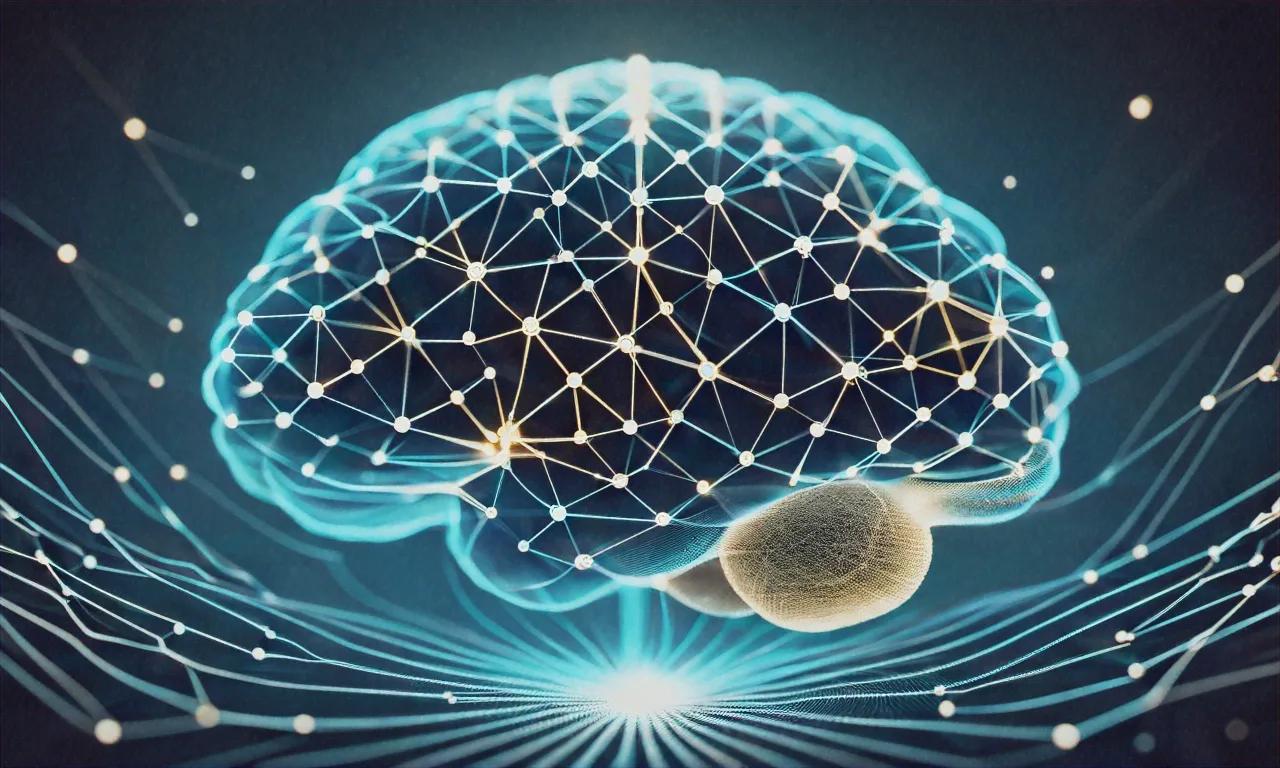
The people who use LLMs the most seem to understand them the least
That sounds like an insult but it's not meant as one. I use ChatGPT and Claude almost daily — for debugging code, drafting emails, working through ideas. And for the longest time, my mental model of how they worked was embarrassingly shallow: "it predicts the next word." Which is technically true. It's also so incomplete that it's borderline misleading.
On the other end you've got the academic papers. Dense notation, matrix multiplication, gradient descent — the kind of material that assumes you already know what you're reading about. I have a CS background and even I find most of them hard to get through in one sitting.
So here's what I'm going to try. An explanation of how large language models actually work — one that a curious person without a machine learning degree can follow. I'll simplify some things because this isn't a textbook, but nothing here should be wrong. If you're completely new to AI in general, it might be worth reading our beginner's guide to getting started with AI first. If you already know the basics and just want to see how the big models compare in practice, we've got a GPT vs Claude vs Gemini comparison that covers that.
By the end, you should have a working mental picture of what actually happens between typing a question into ChatGPT and getting an answer back.
Transformers — the architecture under everything
Every major LLM in 2026 — GPT-4o, Claude 3.5, Gemini 2.0, Llama 3, Mistral — runs on something called the Transformer architecture. It came out of a 2017 Google paper titled "Attention Is All You Need," and I don't think it's an overstatement to call it one of the most significant publications in the history of computer science.
Before transformers, language models relied on architectures called RNNs (Recurrent Neural Networks) and LSTMs (Long Short-Term Memory networks). These processed text word by word, left to right. Slow, and they struggled with long-range dependencies — if a character was named on page one, the model would have a hard time remembering that name by page ten.
Transformers fixed this with a mechanism called self-attention. Instead of reading text sequentially, the model looks at all parts of the input at once and figures out which words matter most to which other words. I'll get into the details in a bit.
The basic structure of a transformer has two parts: an encoder (reads and understands input) and a decoder (generates output). The original 2017 paper used both because it was doing machine translation. Modern LLMs like GPT-4 use only the decoder part — they generate text by predicting one token at a time, where each prediction depends on everything that came before.
These models are built in layers — typically dozens, sometimes over a hundred. Each layer has a self-attention mechanism (the key innovation), a feed-forward neural network (processes each position separately), and some technical infrastructure like layer normalization and residual connections that keep training stable.
Turning words into numbers
Neural networks can't work with text directly. They need numbers. So before anything enters the model, text gets converted into tokens — numerical codes representing chunks of text.
This isn't just splitting on spaces. Tokenizers use algorithms like BPE (Byte Pair Encoding) to break text into subword pieces. Common words get their own token. Rare words get split up. "Understanding" might be one token. "Unfathomable" might become "un", "fath", "om", "able." Numbers, code, and non-English text tend to get chopped into smaller pieces.
Why does this matter?
- The model has a fixed vocabulary — usually 50,000-100,000 tokens. Everything it reads or writes comes from this set.
- The token count of your prompt determines how much of the model's context window gets used. GPT-4o has a 128K token window; Claude 3.5 has 200K. That's how much text the model can "see" at once.
- Tokens affect cost. API pricing is almost always per token.
You can play with this yourself — OpenAI has a free tokenizer at platform.openai.com/tokenizer that shows exactly how text gets split.
# Example: Simple tokenization concept (not actual LLM tokenizer)
from transformers import AutoTokenizer

tokenizer = AutoTokenizer.from_pretrained("gpt2")
text = "Large language models are fascinating"
tokens = tokenizer.encode(text)
decoded = [tokenizer.decode([t]) for t in tokens]

print(f"Token IDs: {tokens}")
print(f"Decoded tokens: {decoded}")
# Token IDs: [16962, 3303, 4981, 389, 21426]
# Decoded tokens: ['Large', ' language', ' models', ' are', ' fascinating']
Self-attention — this is the part that makes it all work
Self-attention lets the model figure out which words in a sentence are most relevant to each other. The intuition is simple even if the math gets dense.
Take this sentence: "The cat sat on the mat because it was tired."
What does "it" refer to? The cat. Obviously. But a computer needs a way to figure that out. Self-attention computes a relevance score between "it" and every other word. The score between "it" and "cat" comes out high. Between "it" and "mat," low. The model then builds a representation of "it" that's heavily shaped by the meaning of "cat."
Multi-head attention takes this further. The transformer doesn't compute attention just once — it runs it multiple times in parallel through different "heads." Each head can pick up on different kinds of relationships. One might learn syntax (subject-verb agreement). Another handles meaning (what a pronoun refers to). Another focuses on nearby words. Yet another tracks high-level themes. All the outputs get combined into a rich representation of each token.
Here's a simplified version of what happens in self-attention, minus the matrix math:
- For each token, the model creates three vectors: Query (Q), Key (K), and Value (V)
- The Query of one token gets compared against the Keys of all other tokens — that produces the attention scores
- Scores get normalized (softmax) so they add up to 1
- Those scores are used to take a weighted average of the Value vectors
I think the best analogy is a library. Your Query is what you're searching for. The Keys are the index entries of every book. The Values are the actual book contents. You compare your search against every index entry, figure out which books are most relevant, then blend the relevant books' contents based on how relevant each one is.
How the model learns — and what it costs
Training an LLM is conceptually straightforward but computationally insane.
Pre-training is the first phase. The model gets fed a massive pile of text — web pages, books, papers, code, forums, more. For frontier models like GPT-4 or Claude, we're talking trillions of tokens. The training task is dead simple on paper: predict the next token. Given a sequence, guess what comes next. If the real next token is "dog" and the model guessed "cat," its parameters get nudged slightly so "dog" becomes more likely next time in similar context.
This repeats billions of times. The model isn't memorizing text — it's learning statistical patterns. How language flows. What facts get stated. How reasoning typically works. What code syntax looks like.
The scale is hard to wrap your head around:
| Aspect | Typical Scale for a Frontier Model |
|---|---|
| Training data | 1-15 trillion tokens |
| Model parameters | 100B - 2T+ |
| Training compute | Thousands of GPUs for months |
| Training cost | $50M - $500M+ |
| Energy consumption | Equivalent to thousands of households for months |
Fine-tuning comes next. The raw pre-trained model is a powerful text predictor but a terrible assistant. It'll happily generate toxic content, make up facts, or ignore what you actually asked. It doesn't know it's supposed to be helpful. Fine-tuning adjusts the model using curated examples — thousands of prompt-response pairs that demonstrate the kind of helpful, honest behavior the developers want.
RLHF (Reinforcement Learning from Human Feedback) is the final polish — the thing that makes ChatGPT and Claude feel conversational instead of like a random text generator. Here's how it works: the model generates multiple responses to the same prompt. Human raters rank those responses from best to worst. A separate "reward model" gets trained to predict human preferences. Then the LLM gets further trained to maximize that reward model's score.
This is why ChatGPT and Claude feel different despite using similar architectures underneath. Their RLHF reflects different priorities. Anthropic (Claude's maker) emphasizes safety and nuance. OpenAI has pushed harder on general capability and engagement. Some newer models use variations like DPO (Direct Preference Optimization) or RLAIF (RL from AI Feedback), which are more efficient but achieve similar results.
Temperature, top-p, and why the same question gives different answers
When generating text, the model produces probabilities for every token in its vocabulary. How it picks from those probabilities is controlled by two settings that matter a lot.
Temperature controls randomness. Say the model predicts: "the" at 40%, "a" at 25%, "one" at 15%, "some" at 10%, everything else at 10%. At temperature 0, it always picks "the" — the highest probability token. Output is deterministic and repetitive. At temperature 1, it samples according to the actual probabilities — 40% chance of "the," 25% of "a," and so on. Output is varied and creative. Above 1, the distribution flattens further. Unlikely tokens become more probable. Output gets increasingly chaotic.
Top-p (nucleus sampling) is a smarter filter. Instead of adjusting the whole distribution, it limits selection to the smallest set of tokens whose combined probability exceeds p. With top-p at 0.9, the model only considers the most likely tokens that together cover 90% of the probability mass. Wildly unlikely tokens get eliminated while still allowing interesting variation.
Most chatbot deployments run temperature around 0.7-1.0 with top-p around 0.9-0.95. For code generation, lower temperature (0.2-0.5) gives more reliable output. For creative writing, higher temperature (0.8-1.2) produces more interesting results.
Context windows — how much the model can see at once
The context window is the maximum number of tokens the model can handle in a single conversation turn. Your input and the model's output both count toward this limit.
| Model | Context Window |
|---|---|
| GPT-4o | 128K tokens (~96,000 words) |
| Claude 3.5 Sonnet | 200K tokens (~150,000 words) |
| Gemini 2.0 Pro | 2M tokens (~1.5M words) |
| Llama 3 405B | 128K tokens (~96,000 words) |
| Mistral Large | 128K tokens (~96,000 words) |
Bigger window = longer documents, longer conversations, more information available when generating a response. Gemini's 2M token window can process entire novels or full codebases.
There's a catch though. Models don't pay equal attention to everything in their context window. Research shows they're better at using information near the beginning and end, with a tendency to lose track of stuff in the middle. It's sometimes called the "lost in the middle" problem.
When models confidently make things up
This is probably the single most important thing to understand about LLMs. They hallucinate. They generate text that sounds completely confident and plausible but is factually wrong. They'll cite papers that don't exist, attribute quotes to people who never said them, describe events that never happened.
Why? Because at their core, LLMs are statistical pattern matchers, not knowledge databases. They generate whatever text is statistically likely given the patterns they absorbed during training. If a plausible-sounding but incorrect fact fits the pattern, the model has no way to tell it apart from a real fact.
Some examples:
- Citing a research paper with a real-sounding title, believable author names, and a specific DOI — none of which exist
- Getting a historical date wrong by several years while stating it with total confidence
- Generating code that calls an API function that doesn't exist in the library
- Offering legal advice citing statutes that were never written
What helps: verify factual claims against real sources. Use RAG (Retrieval-Augmented Generation) — where the model first pulls relevant documents from a database, then generates based on those. Ask for citations and actually check them. For code, always test before trusting. Use lower temperature for anything where accuracy matters more than creativity.
LLMs vs search engines — different tools, different jobs
People mix these up a lot, so here's the distinction:
| Aspect | LLM (ChatGPT, Claude) | Search Engine (Google) |
|---|---|---|
| Function | Generates new text from learned patterns | Retrieves existing web pages |
| Knowledge | Frozen at training cutoff | Real-time web index |
| Sources | Doesn't cite sources reliably | Links to source pages |
| Accuracy | Can hallucinate confidently | Depends on source quality |
| Interaction | Conversational, context-aware | Query-response, mostly stateless |
| Best for | Reasoning, writing, coding, analysis | Finding specific info, recent events |
The best approach is honestly to use both. LLMs for reasoning, synthesis, content generation. Search engines for fact-checking, recent information, primary sources.
How the major models stack up right now
GPT-4o (OpenAI) — The most widely used. Strong at general tasks, coding, and multimodal work (text + images + audio). The "o" means "omni" — it handles multiple input/output types natively. Available through ChatGPT and OpenAI's API.
Claude 3.5 Sonnet (Anthropic) — Known for strong reasoning, the longest context window among proprietary models (200K tokens), nuanced responses, and really good coding. Tends to be more cautious. The free tier on claude.ai is generous.
Gemini 2.0 (Google) — Google's flagship, with that 2M token context window. Deeply integrated with Workspace (Docs, Gmail, Drive). Strong multimodal capabilities. The Pro version's free through the Gemini app.
Llama 3 (Meta) — The most capable open-source model family. The 405B version is competitive with GPT-4 on a lot of benchmarks. Being open source means you can run it locally, fine-tune it, and deploy without API costs. The smaller 8B and 70B variants work on consumer hardware.
Running models on your own machine is one of the more exciting developments recently. Tools like Ollama, LM Studio, and llama.cpp make it pretty easy to download and run open-source models locally.
# Running Llama 3 8B locally with Ollama
ollama pull llama3:8b
ollama run llama3:8b "Explain quantum computing in simple terms"
A laptop with 16GB RAM can handle 7-8B parameter models comfortably. A desktop with 32GB RAM and a decent GPU manages 13-30B models. The full 70B or 405B versions need serious hardware — multiple high-end GPUs with lots of VRAM. Local models are slower than cloud APIs, and smaller ones are less capable than frontier models. But your data never leaves your machine, there's no API cost, and you can fine-tune for specific tasks. That trade-off is worth it for a lot of use cases.
What LLMs genuinely can't do
The hype sometimes obscures the real limits, so here's an honest list.
They can't reason reliably about truly new problems. They pattern-match against what they saw during training. When something is genuinely unlike anything in the training data, their "reasoning" breaks down. What looks like reasoning might just be matching against superficially similar problems.
Math is unreliable. Large number arithmetic, multi-step calculations, mathematical proofs — all shaky without external tools. That's why models increasingly use Python for math instead of trying to compute things "in their heads."
No persistent memory. Each conversation starts fresh (unless the platform specifically adds a memory feature). The model doesn't remember what you discussed yesterday unless that history is explicitly fed into the current context.
No real-time internet access in the base model. Knowledge is frozen at the training cutoff. Some platforms bolt on search as a plugin, but the core model isn't browsing the web.
They don't understand things the way we do. This one's more philosophical, but it matters. LLMs process statistical patterns in text. Whether that counts as "understanding" is a deep debate in AI research. What's clear is that their processing is different from human cognition — they lack embodied experience, don't have common-sense grounding in the physical world, and struggle with causal reasoning in plenty of situations.
Where I think this is going (with the caveat that predictions in this field are almost always wrong)
Some directions seem fairly likely. Multimodality is becoming the default — models will natively handle text, images, audio, video, and structured data, and the line between "language model" and "vision model" is already blurring. The image generation side is already quite mature — our AI image generation guide for 2026 covers the current tools and techniques. Reasoning is getting better through techniques like chain-of-thought and reasoning-focused training. Models are shrinking — distillation and quantization mean a phone in 2027 might run something as capable as a cloud model from 2024. Tool use is becoming central — instead of doing everything through language, models are learning to call calculators, code interpreters, web browsers, and databases.
And then there's the hard one: safety and alignment are still unsolved problems. As models get more capable, making sure they do what we actually want — and not just what they were statistically trained to produce — gets harder, not easier.
I'll be honest: I'm not sure anyone fully understands where this technology is heading. The people building these systems openly say they're surprised by what the models can do. That's exciting and a little unsettling at the same time. Understanding the mechanics — transformers, attention, training, hallucinations — doesn't tell you where it's all going. But it does help you use these tools better, spot their failures, and make smarter decisions about when to trust the output and when to double-check. And given how fast this is moving, that practical understanding might be one of the more valuable things you can develop right now.
Anurag Sharma
Founder & Editor
Founder and editor of Tech Tips India. Writes hands-on tech guides, reviews, and explainers focused on the Indian context — real rupee pricing, local availability, and practical setups tested before publishing.
Stay Ahead in Tech
Get the latest tech news, tutorials, and reviews delivered straight to your inbox every week.
No spam ever. Unsubscribe anytime.
Comments (0)
Leave a Comment
All comments are moderated before appearing. Please be respectful and follow our community guidelines.
Related Articles
Getting Started with AI in 2026: A Beginner's Complete Guide
AI is changing every industry. Learn how it works, the popular tools, and how to start your own AI journey in 2026.

AI Image Generation 2026: Top Tools Compared
Compare Midjourney v7, DALL-E 3, and Stable Diffusion 3. Practical AI image generation guide with prompt tips and copyright info for 2026.
GPT-4o vs Claude vs Gemini: Best AI Model 2026
GPT-4o, Claude 3.5, and Gemini 2.0 compared task-by-task for coding, writing, analysis, multilingual use, and pricing.